
Sports medical examinations
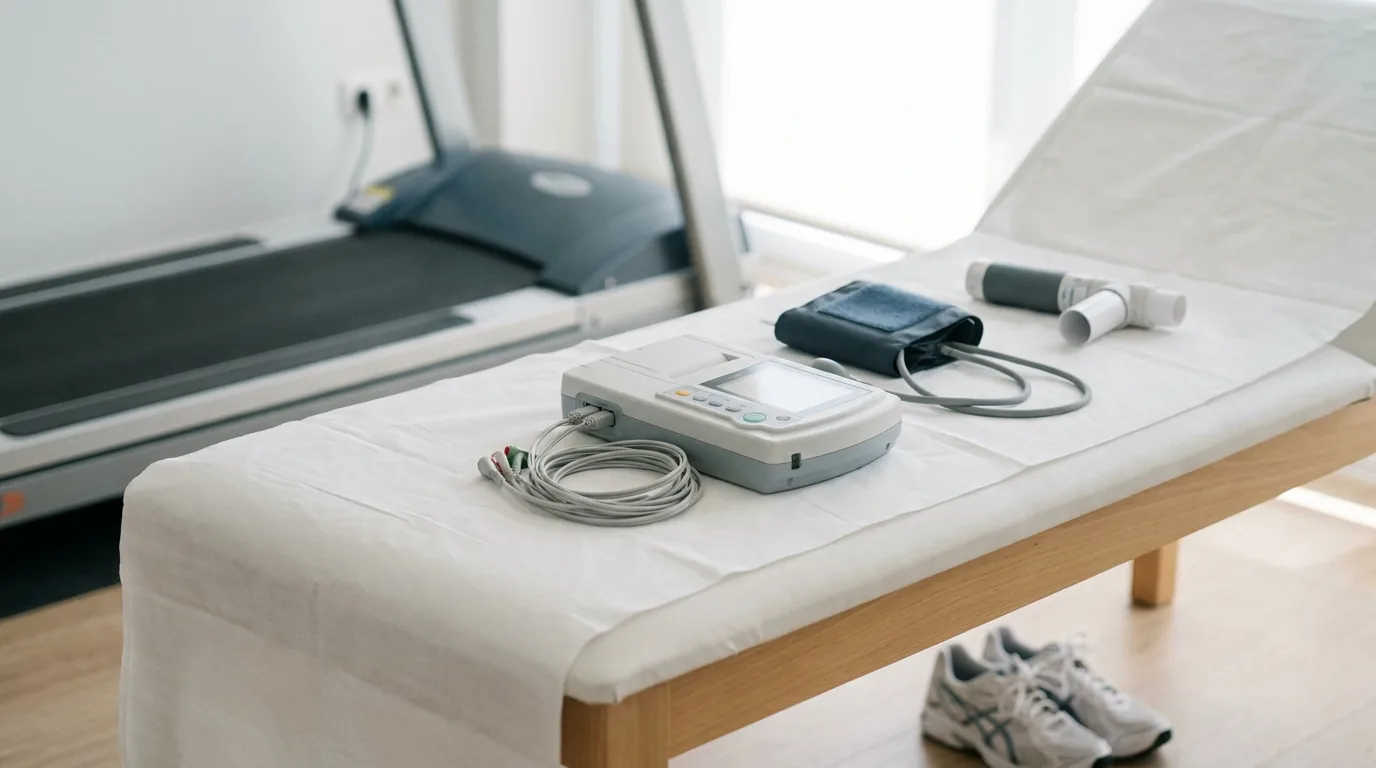
Sports medical examination for federation licence, club or race: medical history, examination and certificate signed by a registered doctor.
Why it is required
A sports medical examination serves to answer a specific question: whether you can safely engage in physical exertion. It is required, above all, to:
- Obtain or renew a federation licence.
- Join a club or start at a gym.
- Register for fun runs, triathlons and endurance events.
- Civil service examinations and selection processes involving physical fitness tests.
It is also suitable for those who do not need to submit any paperwork: resuming sport after years of inactivity, suddenly increasing your training load or noticing chest tightness on an incline are reason enough to sit down and discuss it.
What it involves
It is an in-person consultation. Your medical history is reviewed, along with any medication you take and —the most critical detail when the athlete is young— any family history of sudden death or heart disease before the age of fifty. We then discuss your sport: which one, how many hours, at what intensity and what discomfort or symptoms you experience.
Next comes the physical examination: blood pressure, cardiac and respiratory auscultation, and an assessment of the musculoskeletal system tailored to the demands of your sport. If indicated by the findings or required by your federation, it is completed with an electrocardiogram, a spirometry test or a blood test, and if further investigation is needed, you are referred to Cardiology or Traumatology within the centre itself.
What to bring
- Valid national ID card or passport.
- The form from your federation or club, if you have been given a specific one.
- Previous medical reports, electrocardiograms or tests, even if they are from years ago.
- A list of any medication or supplements you take, including sports supplements.
- Comfortable clothing.
What you receive and what you do not
You receive a certificate signed and stamped by a registered doctor detailing the outcome of the assessment, along with an explanation of the findings. What you do not receive is a generic, indefinite "fit for sport" clearance: the certificate states your condition on the day of the examination and for the specific activity, which is why federations require it every season.
Nor does it replace the driver's medical assessment, which is carried out in an authorised centre and includes its own specific tests. And if you require the official form from the Medical Association —for a scholarship, civil service examination or administrative procedure— that is an official medical certificate.