
High blood pressure (hypertension)
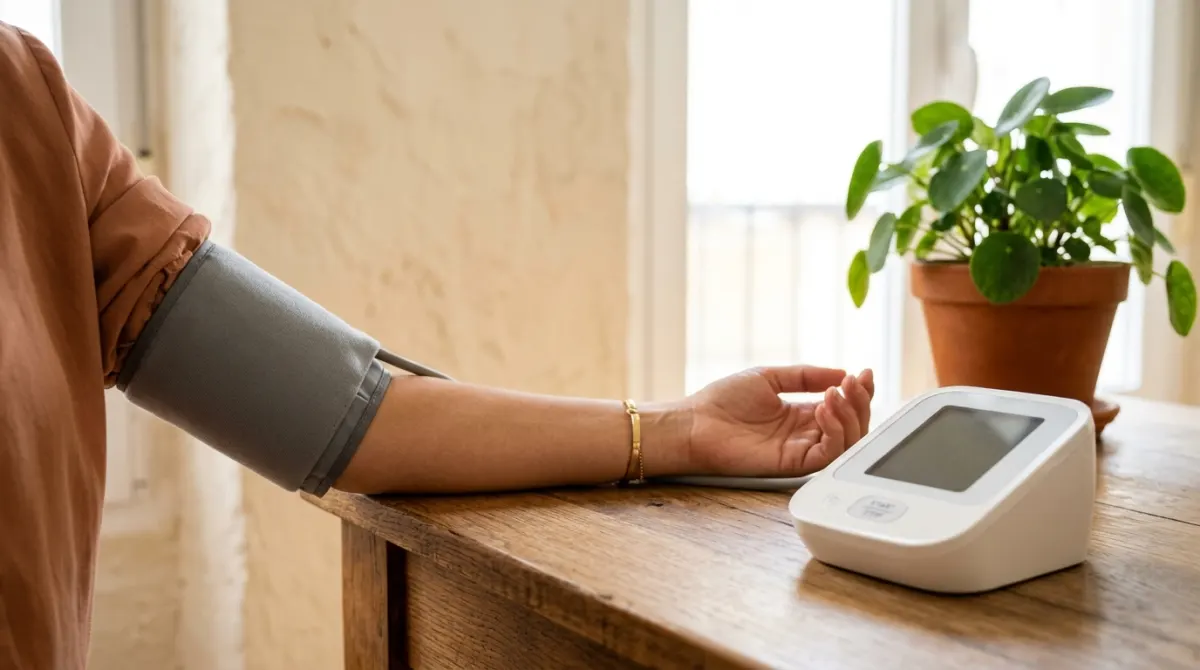
High blood pressure: which readings count as high, how to measure your blood pressure at home, which tests check the heart and when to see a cardiologist.
High blood pressure, or hypertension, means that the pressure of the blood in your arteries stays raised over time. It hardly ever gives any warning: it doesn't hurt, and most people find out at a check-up. Over the years it makes the heart work harder and damages the arteries, and it is one of the factors that weigh most heavily in heart attack, stroke, heart failure and kidney disease. That's why it's worth measuring it properly and treating it in good time.
What blood pressure readings count as hypertension?
Blood pressure measured at the clinic is classified as follows:
- Non-elevated: below 120/70 mmHg.
- Elevated: systolic (the top number) between 120 and 139, or diastolic (the bottom number) between 70 and 89.
- Hypertension: 140/90 or more.
Outside the clinic the thresholds are lower, because blood pressure tends to be somewhat lower at home: hypertension means an average of 135/85 or more in home readings, and 130/80 or more in the average of a 24-hour recording. A single high reading is not a diagnosis: several measurements are needed, and they nearly always have to be confirmed outside the clinic.
Measuring your blood pressure properly
Some people only have high blood pressure in front of the doctor (white coat hypertension) and others have normal readings at the clinic and high ones in daily life (masked hypertension). To avoid treating too much or too little, it's best to confirm the readings outside the clinic in two ways:
- Home blood pressure monitoring (HBPM): with a validated upper-arm monitor, sitting down, with your back supported and after about five minutes' rest; your arm supported at heart level and with no coffee, tobacco or exercise in the previous half hour. The usual approach is to take two readings in the morning and two in the evening for several days in a row, write them down and bring them to your appointment.
- 24-hour ambulatory blood pressure monitoring (ABPM): a cuff that inflates by itself at intervals over a whole day, including while you sleep. It is the method that best shows your night-time blood pressure.
Your doctor can tell you which one suits your case.
What the cardiologist looks at: the effect on the heart
As well as confirming the diagnosis, in cardiology the usual step is to check whether high blood pressure has already left its mark:
- The electrocardiogram (ECG) can show that the heart wall has thickened or detect rhythm problems, such as atrial fibrillation, which is more common in people with hypertension.
- The heart ultrasound (echocardiogram) measures the thickness of the walls, the size of the chambers and how the heart contracts and relaxes. It's requested mainly if the ECG is abnormal or there are symptoms.
- If you also notice palpitations, the 24-hour Holter monitor records your heart rhythm while you go about your normal life.
- A blood and urine test usually completes the assessment: kidney function, protein loss in the urine, cholesterol and glucose.
In young people, those with very high readings or with blood pressure that won't come down on several medicines, treatable causes are also looked for, such as some hormonal or kidney problems, or sleep apnoea.
How it's treated
Lifestyle habits are the foundation and are sometimes enough at the lowest readings: less salt, losing weight if needed, regular physical activity, little alcohol and stopping smoking. If that isn't enough, or if cardiovascular risk is high, medicines are added, often combined in a single tablet. For most people on treatment, the aim is for the top number to be between 120 and 129 if this is well tolerated; in older or frail people the target is adjusted to each case.
When to see a cardiologist
- Your blood pressure has been found to be high on several occasions or your home readings are above 135/85.
- You are on treatment and can't get it under control.
- You are young and have been diagnosed with hypertension.
- You also have palpitations, breathlessness on exertion, chest pain or swollen legs.
Call 112 if your blood pressure is 180/110 or more and you develop chest pain, shortness of breath, difficulty speaking, loss of strength or sensation on one side of the body, confusion, sudden loss of vision or a very severe headache that's different from usual. If your readings are very high but you feel well, take another reading after a few minutes' rest and contact your doctor that same day.
Frequently asked questions
Does high blood pressure cause headaches?
Hardly ever. Most people with hypertension don't notice anything, and a headache is no way of telling whether your blood pressure is high. The only way to know is to measure it.
If my blood pressure is fine on medication, can I stop taking it?
Not on your own. If your readings are fine, it's because the treatment is working; when you stop, they usually go back up. Any change of dose is decided by your doctor, sometimes after a few days of home readings.
Are wrist blood pressure monitors any good?
For regular monitoring, validated upper-arm monitors with a cuff in your size are recommended. Wrist monitors are more sensitive to posture and give more errors; they are only used if your arm doesn't allow accurate measurement.
Based on reliable sources
Prepared by our team from the references listed below. This is general information and does not replace a consultation.
Content pending review by one of our doctors.
References (3)
- McEvoy JW et al. 2024 ESC Guidelines for the management of elevated blood pressure and hypertension. Eur Heart J 2024;45:3912-4018 Open
- Grupo de trabajo de la SEC. Comentarios a la guía ESC 2024 sobre el tratamiento de la presión arterial elevada y de la hipertensión. Rev Esp Cardiol 2025;78(4):296-300 Open
- Stergiou GS et al. 2021 European Society of Hypertension practice guidelines for office and out-of-office blood pressure measurement. J Hypertens 2021;39(7):1293-1302 Open