
Breast biopsy
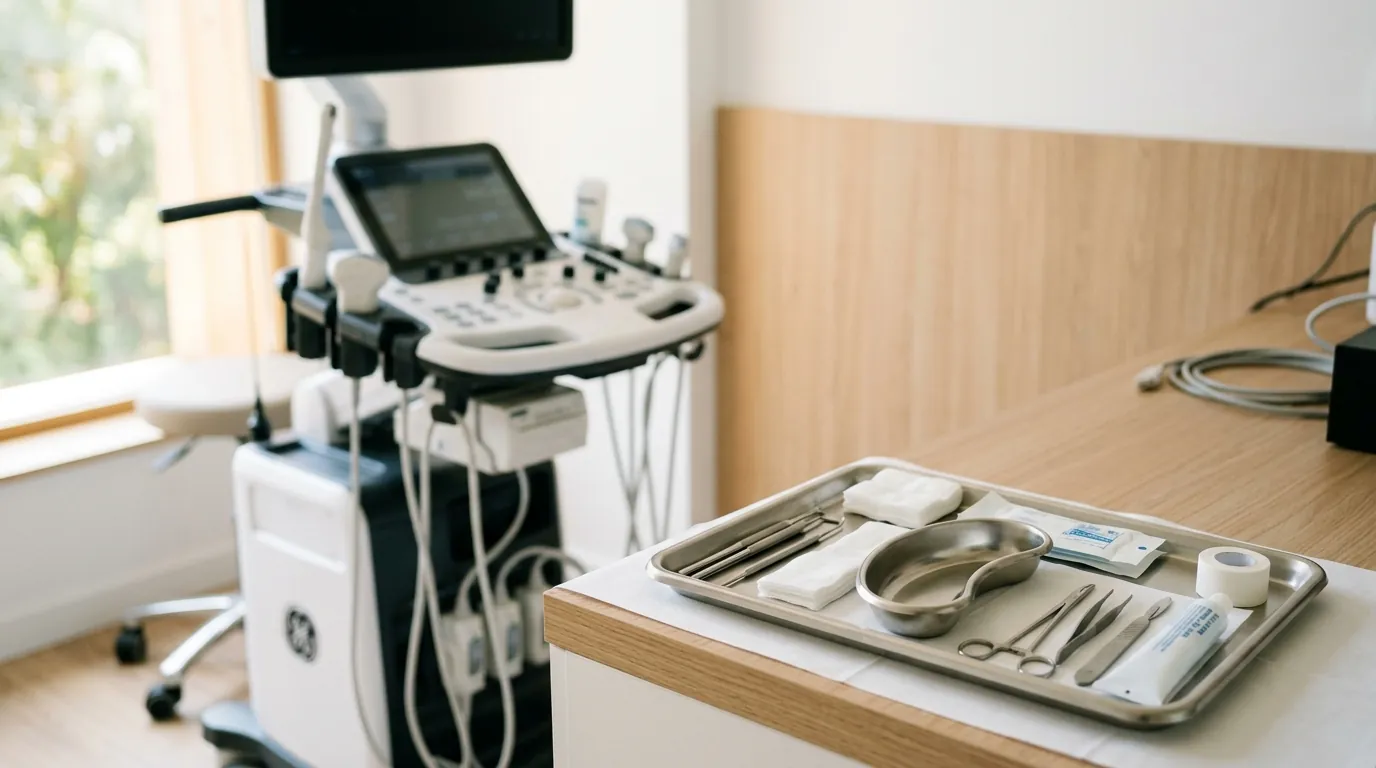
Ultrasound-guided core needle biopsy (CNB) or fine-needle aspiration (FNA) of the breast: the step that provides a definitive diagnosis for a lump.
What it is and why it is performed
Neither mammography nor ultrasound can state with absolute certainty what a lump is: they describe its appearance and estimate its risk. When that estimation recommends it, a biopsy obtains a tissue sample to be analysed under a microscope, which is the only way to obtain a definitive diagnosis.
- FNA (fine-needle aspiration): aspirates cells. Particularly useful for draining and studying cysts, and for evaluating lymph nodes.
- CNB (core needle biopsy): obtains small tissue cores. It is the technique of choice for a solid lump, as it also allows the characteristics of the tumour, if present, to be identified.
What the procedure involves
It is performed under ultrasound guidance, using local anaesthetic. You will feel the sting of the anaesthetic and, with the core needle, a clicking sound from the device that may surprise you, but does not hurt. It takes about twenty minutes. Afterwards, pressure is applied to the area, a dressing is placed, and it is recommended to apply ice, avoid exertion for 24 to 48 hours, and wear a supportive bra. Bruising and some discomfort for a few days are normal.
The waiting period
The results take a few days, and this waiting period is the hardest part. It is worth knowing that having the biopsy performed does not mean there is already a bad diagnosis, but rather that certainty is preferred over monitoring an uncertainty.
After the results
The report is explained during your consultation, always in person, and from there the plan is determined: discharge, regular monitoring, or the corresponding treatment pathway, coordinated by the Breast Unit. If you have been taking blood thinners or antiplatelet medication, please let us know before your appointment.
Frequently asked questions
Does having a biopsy mean it is cancer?
No. Most breast biopsies turn out to be benign. It is done because neither the mammogram nor the ultrasound can say with certainty what a lump is, and it is better to have a definite diagnosis than to keep watching an uncertainty.
What aftercare is needed and when will I have the result?
Compression of the area, ice, avoiding exertion that day and a supportive bra. The result takes a few days and is always explained in person. Let us know before your appointment if you take anticoagulants or antiplatelet medication.
What should you avoid doing after a breast biopsy?
Avoid strenuous activity, sport and lifting weight for 24 to 48 hours, do not get the dressing wet until you are told you can, and do not take anti-inflammatories that increase bleeding if you have been advised against them. Local ice and a supportive bra are recommended. Bruising and discomfort for a few days are normal.
What happens if the biopsy comes back positive?
The result is always explained in person and the study and treatment pathway is set in motion, with the corresponding committee. It is worth knowing that breast cancer detected early has a very good prognosis today, and that a good share of the biopsies performed turn out to be benign.
Questions and comments
Ask the specialist who reviews this page or leave us a comment. Everything is reviewed before it is published.
To write, first confirm your email: we will send you a code.
Content reviewed by Ms Concha Soler Blanca