
Anxiety
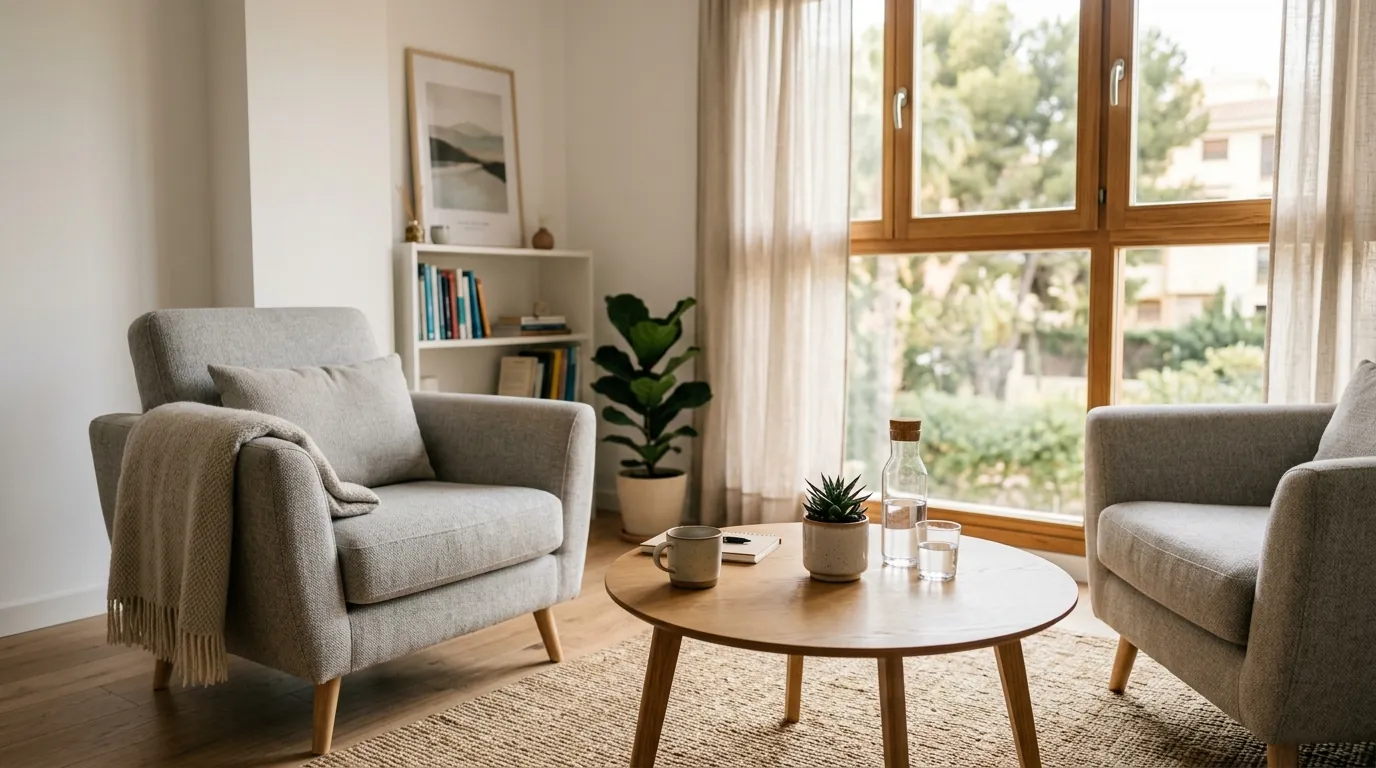
Psychological therapy for anxiety: panic attacks, generalised anxiety, phobias and social anxiety, with concrete tools and clear goals.
What it is and when it stops being useful
Anxiety is a normal, necessary response: it prepares the body to react. The problem starts when it's triggered without real danger, when it lasts too long, or when it forces you to avoid things — driving, public speaking, going out, being alone. That's when it stops protecting and starts limiting you, and that's the moment to ask for help.
How it shows up
- Panic attacks: sudden episodes with palpitations, breathlessness, dizziness and a feeling that something terrible is about to happen.
- Generalised anxiety: constant worry, tension, insomnia, difficulty switching off.
- Specific phobias and social anxiety.
- Physical symptoms with no medical cause: chest tightness, a lump in the throat, digestive discomfort, dizziness.
It's common to have already been to A&E or had several tests done: once those tests come back normal, the logical next step is the psychology clinic.
How we work
With cognitive behavioural therapy and whatever techniques each case needs. We start by understanding what's keeping your anxiety going — usually avoidance and safety behaviours —, then learn tools for physiological regulation, work on anticipatory thinking, and carry out gradual exposure to whatever's being avoided. With specific, reviewable goals, not open-ended conversations.
How long it takes and when it's combined
Many cases improve clearly within a limited number of sessions. When the intensity calls for it, psychological treatment is combined with medical care from psychiatry: these aren't competing options, and in moderate to severe cases the combination works best.
Frequently asked questions
My tests all came back normal, but I still have physical symptoms. Could it be anxiety?
This is a very common situation: chest tightness, a lump in the throat, dizziness or digestive discomfort with no medical cause. When tests come back normal, the logical next step is a psychology consultation, because those symptoms are real and they can be treated.
How many sessions does treatment for anxiety take?
Many cases improve clearly within a limited number of sessions, with specific goals that are reviewed as you go. It is not an open-ended conversation: we work on what keeps your anxiety going —usually avoidance—, you learn tools and you do gradual exposure.
Am I going to have to take pills?
Not necessarily. In mild and moderate anxiety, psychological treatment is the first choice. When the intensity justifies it, it is combined with medical management from psychiatry, and in moderate and severe cases that combination is what works best.
What is the 3-3-3 rule for anxiety?
A simple grounding technique: name three things you can see, three you can hear and move three parts of your body. It helps break the escalation in a moment of distress because it brings attention back to the present. It is a first-aid resource, not a treatment: if the anxiety keeps coming back, it needs to be worked on.
What can I do to calm anxiety?
In the moment, slow breathing with a long out-breath, sensory grounding and, if possible, not fleeing the situation, because avoidance feeds the problem. In the medium term, regular sleep, exercise, less caffeine and alcohol, and therapy to work on what is keeping it going. If it is limiting your life, do not wait.
Questions and comments
Ask the specialist who reviews this page or leave us a comment. Everything is reviewed before it is published.
To write, first confirm your email: we will send you a code.
Content reviewed by Mr Álvaro Chaves Sánchez