
Gingivitis
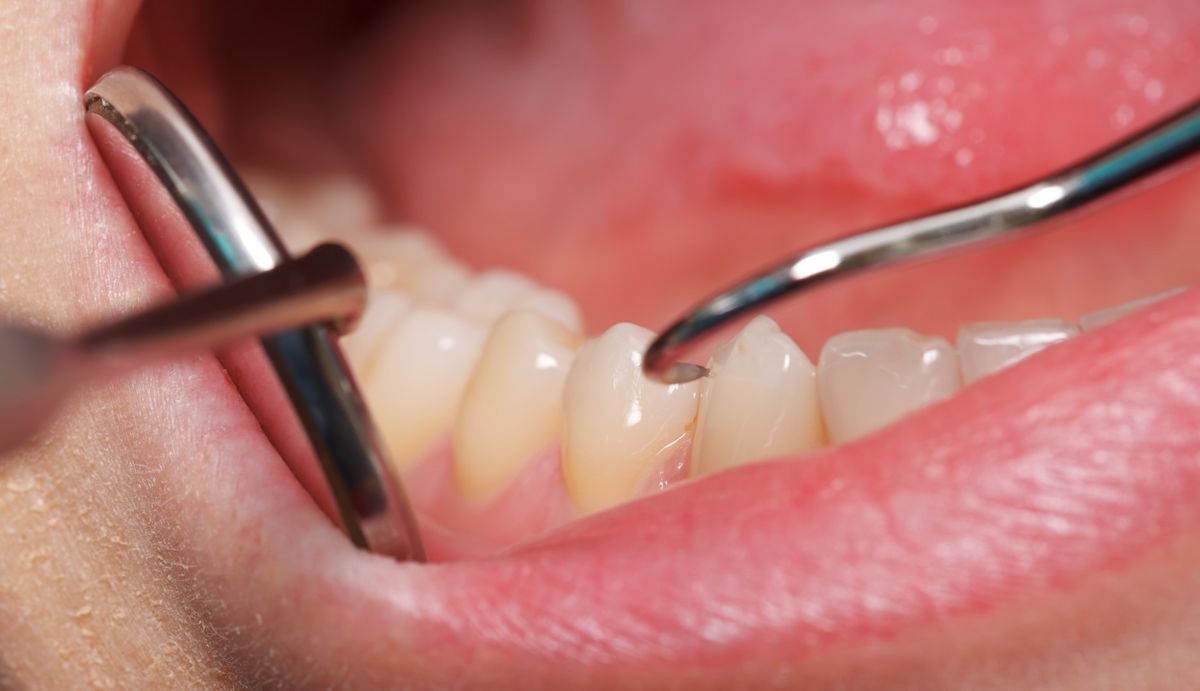
Red, swollen gums that bleed when you brush: what causes gingivitis, why it is the stage before periodontitis and how it is treated in time.
Gingivitis causes inflammation and bleeding in the gums. In most cases, its origin is bacterial
Before discussing any treatment for gingivitis, it is worth knowing what it is and what causes it.
Gingivitis is a disease, usually of bacterial origin, whose main sign is inflammation and bleeding of the gums. It is caused by food debris that can remain between the teeth as a result of poor oral hygiene.
It is the stage before periodontitis, which is why treating it in time is essential.
GINGIVITIS
Gingivitis that is not treated properly can lead to periodontal pockets (a build-up of invisible plaque below the gum line). Periodontal pockets progressively affect the tooth, until there is a risk of developing the disease commonly known as pyorrhoea (periodontitis).
This infection gradually destroys the tissues that hold the teeth in place and, if not treated in time, causes the weakening of the supporting bone, as we said, and the loss of teeth.
A properly prescribed gingivitis treatment can save patients a great deal of trouble and give them healthy gums again sooner than they think.
Prevention and good oral health help to keep gingivitis from appearing.
POSSIBLE CAUSES
In most cases, gingivitis is caused by the build-up of tartar and bacterial plaque produced by poor dental hygiene habits.
If they are not removed with a professional cleaning, the bacteria in the plaque and tartar can end up invading the tissue around the tooth, causing it to become infected and inflamed.
Other common causes are hormonal changes, misaligned teeth, uncontrolled diabetes, the use of certain medicines and, of course, inadequate hygiene and prevention habits.
SYMPTOMS
Almost all patients experience bleeding and swollen gums. Even so, smokers with gingivitis — who are also a risk group for gum problems — do not usually bleed, since tobacco causes vasoconstriction.
Gingivitis also turns many patients' gums an intense red or purple colour.
At moderate levels, gingivitis is usually treated with a deep professional cleaning that removes the plaque and tartar causing the problem.
In advanced cases, gingivitis treatment also needs to be supplemented with antibiotics and mouthwashes.
PREVENTION
Remember to brush your teeth after every meal and to use dental floss daily whenever you can. Products designed for gum health, such as mouthwashes, water flossers or special brushes, are also quite effective additions for removing bacterial plaque and the inflammation it causes.
PERIODONTITIS
Frequently asked questions
Does gingivitis clear up completely?
Yes, it is reversible if treated in time: with professional cleaning and correct hygiene, the gum stops bleeding and recovers its appearance within a few weeks. What you cannot do is let it run its course, because it can progress to periodontitis.
Why do I have bad breath?
Persistent bad breath usually comes from bacteria building up between the teeth and under the gum, and from the tongue. It is corrected by treating the inflammation, improving cleaning between the teeth and cleaning the top of the tongue; mouthwashes on their own mask it but do not solve it.
Are chlorhexidine mouthwashes useful?
They are useful for short, prescribed periods, as support after a treatment. They do not replace brushing or cleaning between teeth, and used continuously they stain the teeth and alter taste. They are used when the professional indicates them and for as long as they indicate.
What are the symptoms of gingivitis?
Red, swollen and tender gums, bleeding when brushing or flossing, bad breath and a soft feeling in the gums. It does not usually hurt, which is why it goes unnoticed for months. Bleeding that keeps coming back in the same spot deserves a check-up even if it does not bother you.
How do you tell whether it is gingivitis or periodontitis?
They cannot always be told apart by eye: measuring is needed. In gingivitis the inflammation is superficial and the bone is intact; in periodontitis bone has been lost and pockets appear on probing, along with gum recession or mobility. Periodontal probing and an X-ray give the answer during the same appointment.
How many days does gingivitis last?
With a professional clean and proper hygiene, the inflammation subsides within one or two weeks. If the bleeding persists beyond that, or comes straight back, brushing technique and interdental cleaning need reviewing, and periodontitis underneath must be ruled out.
Related articles
Periodontal disease: symptoms and gum treatment
Bleeding or receding gums and bad breath: how periodontal disease progresses, how it is diagnosed and which treatments stop it in …
Dr Manuel Díaz Cano ·