
Consejos
Published on
Retainers after braces: why you wear them and for how long
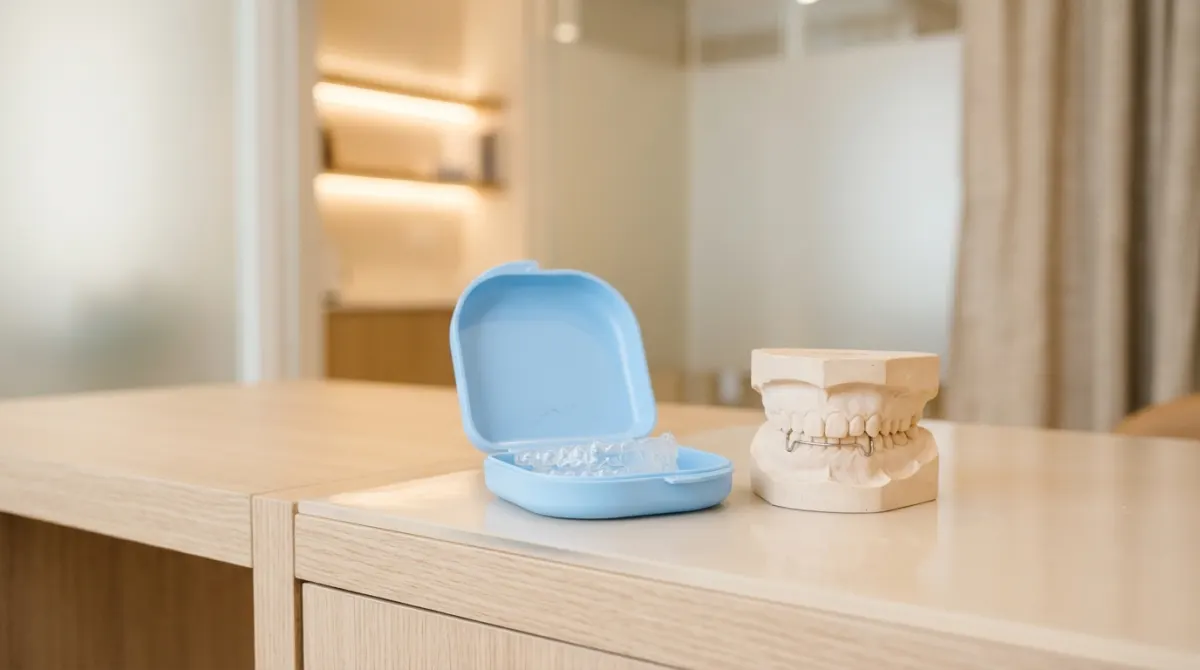
Why teeth move again after orthodontics, fixed or removable retainers, how long to wear them and what to do if you lose one or it comes unstuck.
Having your braces taken off or finishing your last aligner isn't the end of orthodontic treatment. Next comes the retention phase: you wear retainers after braces so that your teeth stay where they have been placed. Without them, teeth tend to drift slowly back towards their previous position. This applies equally to orthodontics with braces and to invisible orthodontics.
Why teeth tend to go back to where they were
This moving back is called relapse. It has several causes that add up:
- The tooth's support takes time to adapt. The bone and the fibres that attach each tooth to the gum and the bone reorganise for months after it has been moved. In the meantime, the tooth has a certain tendency to return to its position.
- The forces in your mouth never stop. Your lips, tongue and cheeks push against your teeth every day, and the way you bite also has an effect.
- Your mouth changes over the years. Even if you have never had orthodontic treatment, teeth shift somewhat throughout life; the lower front teeth often become crowded with age. In teenagers, growth also continues after treatment has finished.
Teeth that were very rotated, very spaced or very crowded at the start usually have a greater tendency to go back, and in those cases the orthodontist pays special attention to retention. That is why it isn't an optional extra: it is what protects the result of your orthodontic treatment.
Fixed retainer or removable retainer
There are two main types, and they are often combined: for example, a fixed one on the lower teeth and a removable one on top, or both on the same arch.
Fixed retainer
This is a thin wire bonded to the inner surface of the teeth, normally the front ones. It can't be seen from the outside and doesn't depend on you remembering to put it in, which is its great advantage.
In return, it requires more care with hygiene: plaque and tartar build up around the wire and you have to clean with floss threaders or interdental brushes. It can also come away from a tooth without you noticing, so it's a good idea to have it checked at your visits.
Removable retainer
This can be a custom-made clear retainer, similar to an aligner, or a resin plate with a wire across the front. You take it out to eat and to clean it, and it makes it easier to clean your teeth.
Its weak point is that it only works if you wear it. It can also get lost, break or warp with heat.
No one type is better in all cases, and it hasn't been shown that one works clearly better than the other, so the choice depends on each mouth: how the teeth were at the start, what movements have been made, the risk of relapse, and each person's hygiene and consistency.
How long you need to wear a retainer
There is no figure that applies to everyone, and it is the orthodontist who sets the routine. The usual way of doing it is:
- At first, the removable retainer is worn for more hours, because this is when teeth are most likely to move.
- Later, this is gradually reduced, normally until you wear it only at night.
- In the long term, many orthodontists recommend keeping up retention for years, or indefinitely, because teeth can go on moving with age. The longer you keep it up, the longer you keep the result.
A fixed retainer can stay in place for years if it is well bonded and the gum around it stays healthy.
If you have worn aligners
With clear aligners such as Spark aligners, the retention phase is just as necessary as with braces. A removable retainer can look very much like an aligner, but its job is different: it doesn't move your teeth, it keeps them in place.
Don't use your last aligner as a retainer on your own initiative: ask your orthodontist first. If you'd like to go over what the whole treatment involves, we cover it in the guide to invisible orthodontics.
What happens if you stop wearing it, lose it or break it
- If you stop wearing it for a few days and it feels very tight when you put it back in, your teeth have already started to move. Go back to wearing it as you were told and get in touch. Don't force it if it won't go in.
- If you lose it or it breaks, let us know as soon as possible so a new one can be made. The longer you go without a retainer, the more your teeth can move.
- If your fixed retainer comes unstuck from a tooth or you notice the wire is loose or poking, book an appointment soon. Don't cut it or stick it back yourself. A wire that has come away can allow that tooth to move.
- If your teeth have already moved noticeably, the orthodontist will assess whether a new retainer is enough or whether a short course of treatment is needed to reposition them.
Looking after your retainer and getting it checked
- Clean your removable retainer every day with a soft brush and cold or lukewarm water. Hot water can warp it.
- Always keep it in its case when you aren't wearing it. Wrapped in a napkin, it's easy to throw away by accident.
- Take it out to eat and to drink anything other than water.
- With a fixed retainer, take time to clean between your teeth and around the wire, and keep up your regular dental cleanings.
- Go to your retention check-ups even if everything is going well: this is when a wire that has come unstuck or a worn retainer is picked up.
If you are about to start orthodontic treatment or are finishing it, ask from the start what retention you will have. In both invisible orthodontics and orthodontics with braces, the retention plan is part of the treatment.
Frequently asked questions
Can I stop wearing my retainer after a few years?
Teeth can move at any age, so some change is likely once you stop. If you are thinking of giving it up or wearing it less, talk to your orthodontist first to weigh up the risk in your case.
Does a fixed retainer cause decay or gum problems?
The wire doesn't cause them in itself, but it makes it easier for plaque and tartar to build up around it. With good cleaning between your teeth and regular check-ups, your gums can stay healthy.
Is it normal for my retainer to feel tight when I put it in?
Slight pressure when you put it in, especially in the morning, can be normal. If it is very tight, won't go in or hurts, your teeth may have moved or the retainer may be warped: book an appointment rather than forcing it.
Does a retainer affect the way you talk?
A fixed one, on the inner surface, is hardly noticeable after a few days. Removable ones can change your pronunciation slightly at first, and most people soon get used to them.
Based on reliable sources
Prepared by our team from the references listed below. This is general information and does not replace a consultation.
Article pending review by one of our dentists.