
Aesthetic braces in orthodontics
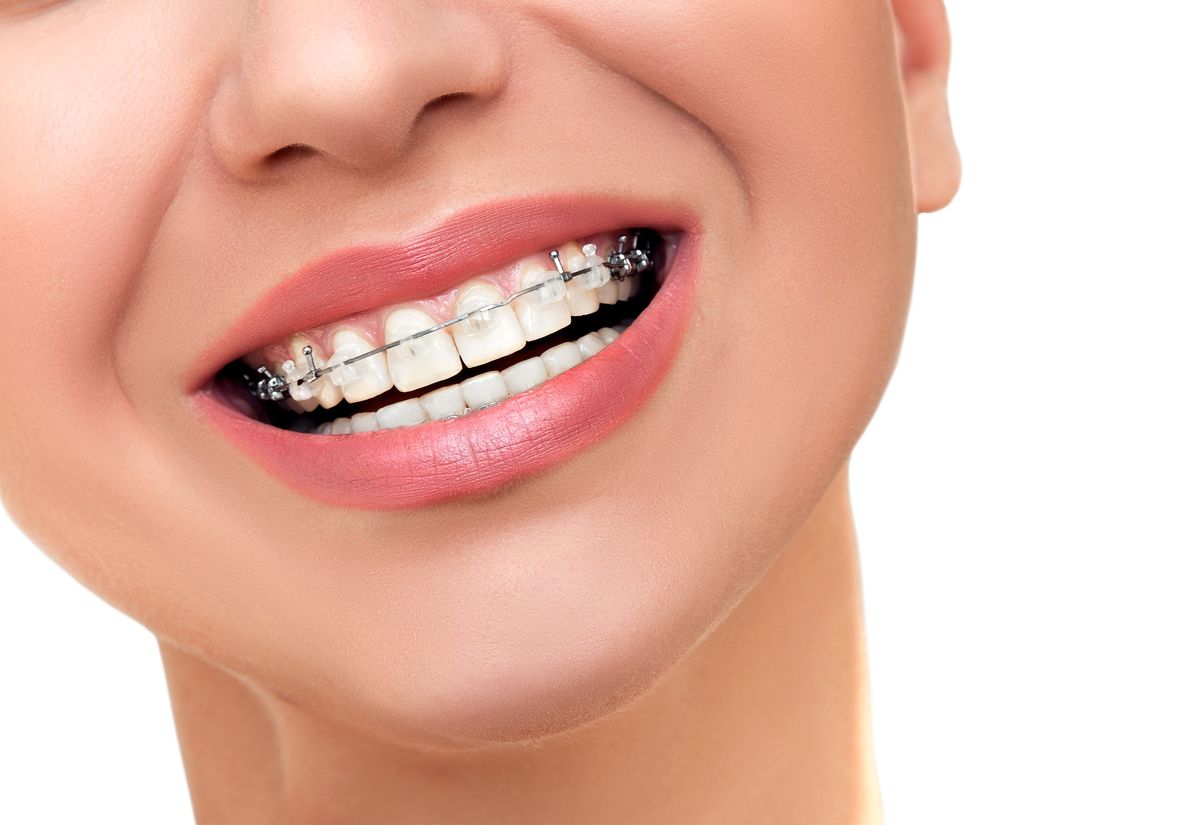
Sapphire or ceramic brackets to straighten your teeth without the visible look of metal: how they differ and when they are combined with metal braces.
Aesthetic braces clinic
Aesthetic braces in orthodontics aim to align the teeth without setting appearance aside.
There are two types of aesthetic brackets we work with at our centres: sapphire brackets and ceramic brackets. It is worth noting that aesthetic brackets can be combined on the upper arch with metal ones on the lower arch.
Why does sapphire stand out among aesthetic brackets?
If appearance matters to you above all, sapphire brackets are among the best orthodontic options. Their look neither limits nor affects their efficiency. All brackets are effective, but sapphire brackets stand out for being transparent, which makes them far less noticeable.
It is no secret that sapphire is one of the hardest minerals (highly resistant to scratching). That gives an idea of how durable it is as an alternative to metal brackets.
Advantages of using sapphire in aesthetic braces
These are the advantages of sapphire brackets at our dental clinic in Málaga:
- Adults tend to prefer them, since they barely change the appearance of their smile.
- Their hardness does not affect comfort: the edges are shaped and rounded so they do not cause irritation.
- They do not change their appearance during treatment.
- The time needed to correct the teeth is the same as with metal brackets.
How do sapphire brackets differ from ceramic or plastic ones?
Sapphire stands out because it stays unchanged from the beginning to the end of orthodontic treatment. Unlike plastic or ceramic, sapphire is a premium material. They may look alike, but they are not. Ceramic and plastic lose their initial appearance more easily and stain through contact with external agents.
Sapphire brackets are in high demand among adult patients because, unlike ceramic ones, they do not stain.
At Clínicas Rincón Dental we offer you a service that is 100% personalised and tailored to you
Sapphire brackets, unlike ceramic ones, do not stain and are usually in high demand among adult patients.
Frequently asked questions
What is the difference between aesthetic and metal braces?
The material: aesthetic brackets are made of ceramic or sapphire, in the colour of the tooth, and are far less visible. They work on the same principle and achieve the same movements; they usually require slightly more care and the treatment may take a little longer.
Do they stain?
The bracket itself does not discolour, but the elastics holding the archwire can do so with coffee, tea, red wine, curry or tobacco. They are changed at every appointment, so the effect is temporary, and it is greatly reduced by watching those foods.
Are they more fragile?
Ceramic is strong, but it tolerates knocks and very hard foods less well than metal. With the usual precautions for any orthodontic treatment —no ice, whole nuts or hard sweets— there is usually no problem.
Which type of braces is most effective?
They all achieve the same movements if the treatment is properly planned; the difference lies in the material and the handling. Metal is stronger and somewhat more efficient in complex cases, while ceramic or sapphire win on aesthetics. Effectiveness depends far more on the diagnosis and the follow-up than on the type of bracket.
Which is better, aesthetic or metal braces?
If the priority is that they should not show, aesthetic ones; if the priority is strength, cost and maximum efficiency in a complex case, metal ones. In children and teenagers metal braces are usually recommended for their strength. It is decided in the initial study, after seeing which movements need to be made.
Related articles
Complete guide to invisible orthodontics: aesthetics and health without braces
How clear aligners work, their advantages over braces, how long treatment takes, and who they're suitable for.
Invisible orthodontics with Spark: how it works step by step
From 3D scanning to aligners: how Spark invisible orthodontic treatment works, how long it takes and what advantages it has over b…