
Wisdom tooth extraction
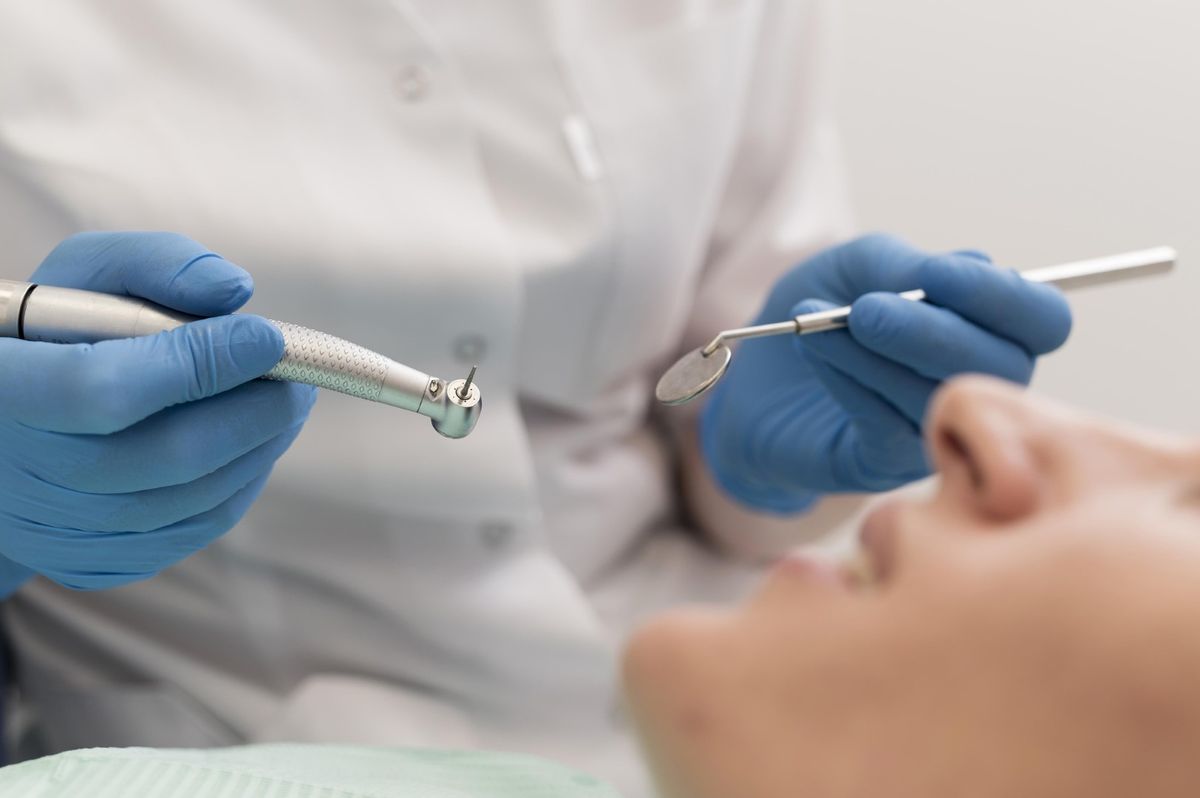
When a wisdom tooth has to be removed, what the procedure is like under local anaesthetic or sedation, and what aftercare the recovery requires.
An oral and maxillofacial surgeon or a dentist can remove a wisdom tooth
Wisdom teeth, also known as third molars, are the last permanent teeth to appear or erupt. They usually come through between the ages of 17 and 25, although some people do not have them at all.
This kind of procedure is generally carried out in the surgery itself under local anaesthetic, although patients who wish to may request another form of sedation or anaesthesia.
To prevent future problems, some specialists recommend removing wisdom teeth even when they are not yet causing any trouble
70% of Spaniards have at least one lower wisdom tooth that does not come through properly, and this happens with the upper ones in 45% of cases
[Spanish Society of Oral and Maxillofacial Surgery
As a general rule, these teeth are removed by a dentist, although if a more complex procedure is required the extraction will be carried out by a maxillofacial surgeon.
It is important not to have any kind of infection before undergoing this procedure. If you do, the dentist can prescribe antibiotics to help clear the infection before the extraction is carried out.
After the extraction, stitches may be needed. Your dentist will tell you whether the stitches dissolve after a while or whether you will need to come back to the surgery to have them removed.
Frequently asked questions
Do wisdom teeth always have to be removed?
No. If they are well positioned, fully erupted, can be cleaned and cause no problems, they can be kept. Extraction is considered when there is pain, repeated infections, decay, cysts, damage to the neighbouring molar or lack of space.
Does having a wisdom tooth out hurt?
Not during the procedure, thanks to the local anaesthetic. Afterwards swelling and discomfort are normal, peaking between 24 and 48 hours, and they settle with the prescribed medication. Applying cold locally in the first few hours helps considerably to reduce the swelling.
How many days of recovery do I need?
The usual range is between two and five days of discomfort and swelling, more marked with impacted lower wisdom teeth. It is best not to schedule the extraction just before an important commitment and to set aside a few days for a soft diet.
Why am I asked for a scan beforehand?
Because the 3D scan shows the exact position of the roots in relation to the dental nerve and the maxillary sinus. With that information the surgery can be planned and the risk of complications drops: it is especially important for lower wisdom teeth.
What happens if wisdom teeth aren't removed?
If they are well positioned and can be cleaned, nothing may happen in your whole life. The problem appears when they are partially impacted: plaque builds up behind the neighbouring tooth and decay appears in the second molar, along with repeated gum infections (pericoronitis), cysts or resorption of the neighbouring root. That is why they are checked with an X-ray even when they do not hurt.
What symptoms do you get when a wisdom tooth comes through?
Discomfort or pressure at the very back of the jaw, swollen and tender gum behind the last molar, pain on biting, difficulty opening your mouth fully and sometimes pain referred to the ear or the head. If there is fever, facial swelling or pus, you should seek care without delay.
When is a wisdom tooth dangerous?
When it causes an infection that spreads: swelling that rises towards the eye or moves down to the neck, fever, difficulty swallowing or opening your mouth. That is an emergency. Also when it is silently damaging the neighbouring molar or when it is associated with a cyst, findings that only show up on an X-ray.