
Allergy testing
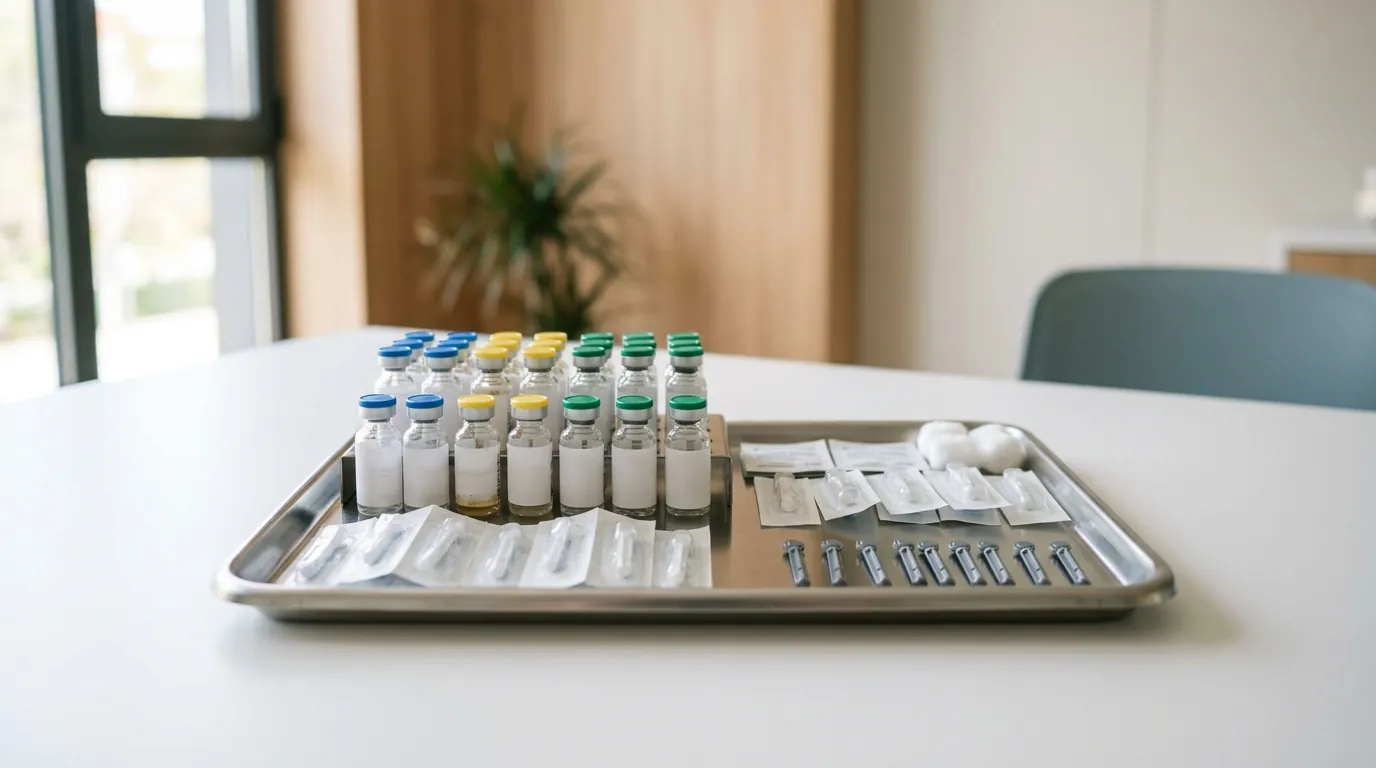
Allergy testing at the clinic: skin prick test and specific IgE blood test to identify pollen, dust mites, animal dander, food and medication allergies.
What allergy testing is
An allergy test puts a name to what's disagreeing with you. Symptoms — sneezing, itchy eyes, hives, coughing — look a lot alike and almost never point to the cause on their own. The test turns a suspicion into a fact.
There are two types, and they're often combined:
- Prick test (skin test): drops of different allergens are placed on your forearm and each one is given a very light prick. Within about fifteen minutes you can see which ones react. It barely hurts and is read at the same appointment.
- Specific IgE blood test: a blood test that measures antibodies against each allergen. It's useful when the skin can't be pricked, when food or medication allergy needs to be pinned down more precisely, or when you're taking antihistamines.
When to book an appointment
- Sneezing, a runny nose or itchy nose and eyes that come back every year around the same time.
- Coughing or wheezing on exertion, at night or when cleaning the house.
- Hives, eczema or swelling with no clear cause.
- A reaction after eating something specific or taking a medication.
- A reaction to a bee or wasp sting.
How to prepare
For the prick test it's best not to take antihistamines in the days beforehand, as they dampen the skin's reaction and can give a false negative; at the appointment we'll tell you how many days, depending on what you take. You usually don't need to stop the rest of your medication, but bring a note of it. If you're coming in after a reaction to a food or a drug, bring the packaging or the exact name: that's half the diagnosis right there.
And afterwards
With the result in hand, the plan is decided: avoidance measures where possible, symptom treatment and, in cases where it's justified, allergy vaccine. A positive result doesn't always mean that's your problem: it's read alongside what happens to you and when, and that's the job of the allergy.
Frequently asked questions
Do allergy tests hurt?
The prick test is done with a very superficial prick on the forearm, no deeper than a scratch: it stings a little and lasts an instant. What is most noticeable afterwards is the itching at the drops that react, which passes after a while. If an IgE blood test is done, it is a normal blood draw.
Do I have to stop taking my antihistamine beforehand?
Yes. Antihistamines switch off the skin reaction and the test would come back falsely negative. Depending on which one you take, it has to be stopped between three and seven days beforehand; at the appointment we tell you exactly how many. The rest of your usual medication does not normally need to be stopped, but bring a written list of it.
When will I have the result?
The prick test is read during the appointment itself: in about fifteen minutes you can see what has reacted. The specific IgE blood test takes a few days, depending on the laboratory. With both in hand, the allergist interprets the result alongside what happens to you and when it happens.
What types of allergy tests are there?
The two usual ones are skin tests —the prick test, with drops of allergen and a superficial prick on the forearm— and a blood test for specific IgE. Depending on the case, patch tests are added for contact allergy or controlled challenge tests for foods and medicines.
Can I have allergy tests if I am pregnant?
Always mention it beforehand. During pregnancy specific IgE blood testing is preferred, as it carries no risk, and skin tests and above all challenge tests are postponed, since they can trigger a reaction. The study can be completed after the birth without losing anything.