
Consejos
Published on
Tooth decay: how to tell if you have a cavity and how it is treated
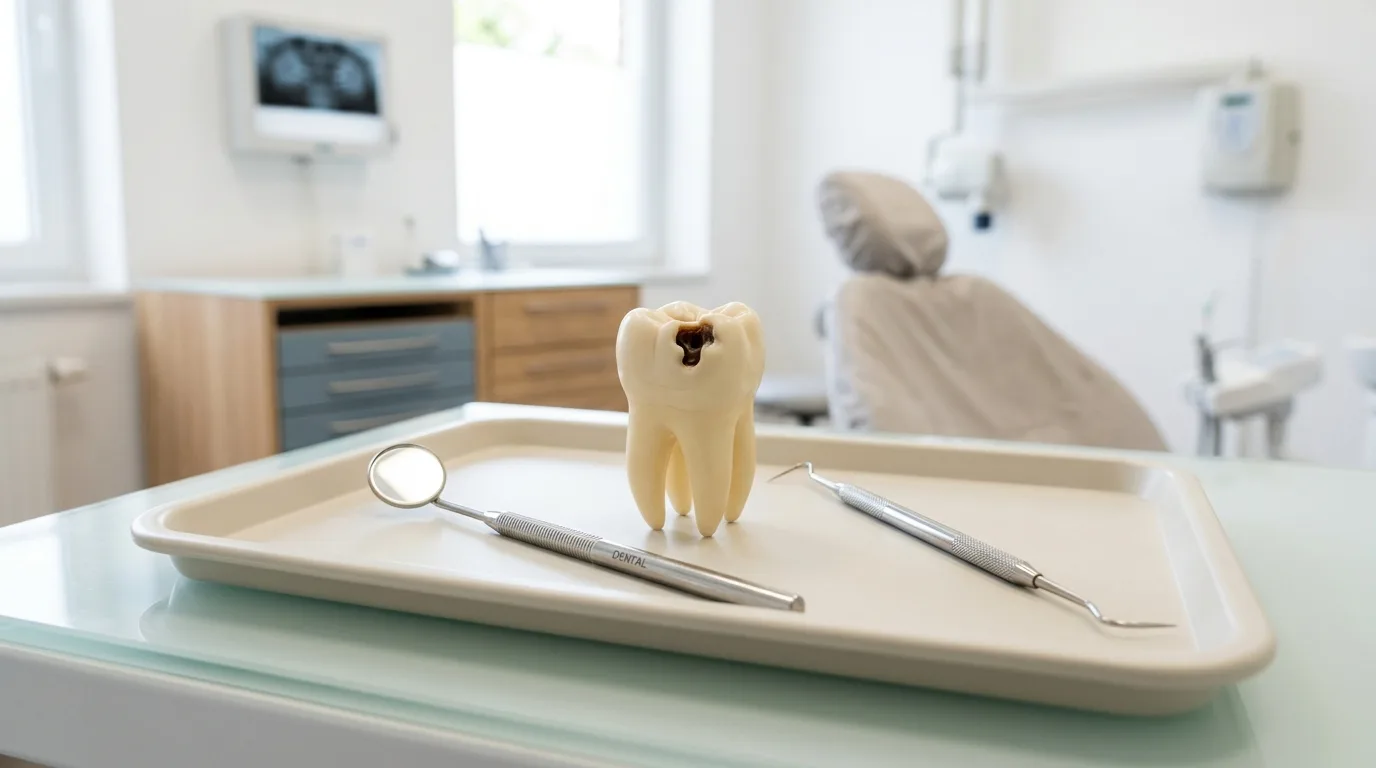
What tooth decay looks like, the signs of a cavity and why it sometimes doesn't hurt, the types and how it is treated at each stage. And how to prevent it.
What tooth decay is and why it happens
Tooth decay, or dental caries, is the gradual destruction of the hard tissues of the tooth. It is caused by the bacteria in dental plaque: when they feed on the sugars in your diet, they produce acids that slowly dissolve the minerals in the enamel.
It doesn't appear overnight. Throughout the day, teeth are constantly losing and regaining minerals: saliva and fluoride help to repair what the acids wear away. Decay develops when, over a long period, the loss outweighs the repair. That is why hygiene matters as much as the frequency with which you have sugar: snacking often gives bacteria more opportunities to produce acid than having the same amount in one go.
Other factors increase the risk: a dry mouth (caused by some medicines or illnesses), receding gums that leave the root exposed, fillings or dental prostheses with edges where plaque builds up, and braces that make cleaning harder.
What a cavity looks like: from a white spot to a hole
Its appearance changes depending on the stage it has reached:
- White spot. This is the first visible sign: a whitish, matt area with no shine, often near the gum or around brackets. The enamel has lost minerals, but there is no hole yet.
- Brown or dark spot. Some lesions become stained over time. Not every dark spot is active decay: it may be a stain or an old lesion that has stopped progressing, and telling them apart is a job for the dentist.
- Cavity. When the enamel breaks down, a hole appears, small at first. You may be able to feel it with your tongue, it may trap food or its edges may feel rough.
- Deep decay. The lesion spreads through the dentine, which is softer than enamel, and gets closer to the nerve. From the outside it may still look small even though it is large inside.
Many cavities start in places you can't see in the mirror: between two teeth, in the grooves of the back teeth or under the edge of an old filling.
Signs of tooth decay, and why it sometimes doesn't hurt
- Sensitivity or a brief pain when you have something cold, hot or sweet.
- Food that always gets stuck in the same gap, or floss that shreds when it passes a particular spot.
- A hole or rough patch you can feel with your tongue.
- A spot that changes colour or size.
- A bad taste or persistent bad breath in one particular area.
- Pain when biting.
Enamel has no nerve endings, so as long as the decay is confined to it, it doesn't hurt. Discomfort usually starts when it reaches the dentine, and severe pain when it reaches the nerve. That is why not feeling any pain doesn't mean you don't have decay, and why regular check-ups pick up lesions the patient hasn't noticed.
Types of tooth decay
Decay can be classified by where it appears and by how deep it goes. These are the types most often mentioned at the dentist's:
Enamel caries
This is the initial stage, limited to the outer layer of the tooth. It includes white spots and lesions in the grooves of the back teeth, where plaque builds up easily. It is the type that responds best to prevention.
Decay between the teeth
It appears on the surfaces where two teeth touch, which the toothbrush can't reach. It is hard to see with the naked eye and is often discovered on an X-ray.
Root caries
This affects the root when the gum has receded and left it exposed. The root is not protected by enamel, so decay progresses through it more easily. It is more common in older people and in those with a dry mouth.
Deep decay
This is decay that has gone through much of the dentine and is close to the nerve, or has already reached it. It usually causes clearer symptoms and its treatment is more complex.
In children there are also specific forms, such as baby bottle tooth decay, which affects the milk teeth when a child falls asleep drinking sugary liquids.
How the dentist diagnoses it
Diagnosis combines several checks:
- Visual examination under good light, with the tooth clean and dry, and a mirror to see all its surfaces.
- Careful examination with instruments to assess the texture of the surface, without pressing on areas that have lost mineral.
- X-rays, especially small bitewing X-rays, which show the surfaces between the teeth and the depth of the lesion. With digital X-rays, the images appear on screen instantly; we explain this in our article on digital dentistry.
With that information, the dentist determines whether the lesion is active or arrested, how far it goes and what treatment it needs.
Tooth decay treatment, depending on how advanced it is
- Early lesion with no cavity. A white spot with no hole can be halted and can even regain some of the lost mineral: more fluoride (in toothpaste or applied at the surgery), better hygiene in that area, less frequent sugar and monitoring at check-ups. In the deep grooves of the back teeth, a fissure sealant may be considered.
- Decay with a cavity. The damaged tissue is removed and the tooth is filled, usually with tooth-coloured composite resin.
- Extensive decay. If little healthy tooth is left, it may need a larger restoration, an inlay or a crown.
- Decay that has reached the nerve. This usually requires root canal treatment before the tooth is rebuilt.
- A tooth that can no longer be restored. In that case, extraction and how to replace the tooth are considered.
The earlier decay is detected, the simpler and more conservative the treatment usually is.
A cavity won't heal on its own: what happens if it isn't treated
A cavity does not close up by itself: the tooth cannot regenerate the enamel or dentine it has lost. The only thing that can be halted, and partly reversed, is an early lesion with no cavity, and only if the conditions that caused it change.
If decay isn't treated, it usually keeps progressing. It can reach the nerve and cause severe pain, an infection at the root or an abscess, and end with a tooth that can no longer be saved. The pace varies widely from one person to another and from one tooth to another, so there is no way of knowing how long a cavity will "hold out" without having it checked.
How to prevent tooth decay
- Brush twice a day with fluoride toothpaste and, when you finish, spit out the excess without rinsing with water, so that the fluoride keeps working. If you want to go over the technique, we explain it in tips for brushing your teeth properly.
- Clean between your teeth every day with floss or interdental brushes.
- Cut down on how often you have sugary or acidic food and drinks, especially between meals.
- Drink water throughout the day and tell your dentist if your mouth often feels dry.
- Go to your check-ups and professional teeth cleaning appointments as often as your dentist recommends.
If you notice any of these signs or it has been a while since your last check-up, our dentists in Málaga, Torremolinos, Rincón de la Victoria, Torre del Mar and Nerja assess the health of your teeth and explain what they need.
Based on reliable sources
Prepared by our team from the references listed below. This is general information and does not replace a consultation.
Article pending review by one of our dentists.