
Consejos
Published on
Teeth whitening with fillings or crowns: what changes and what to plan
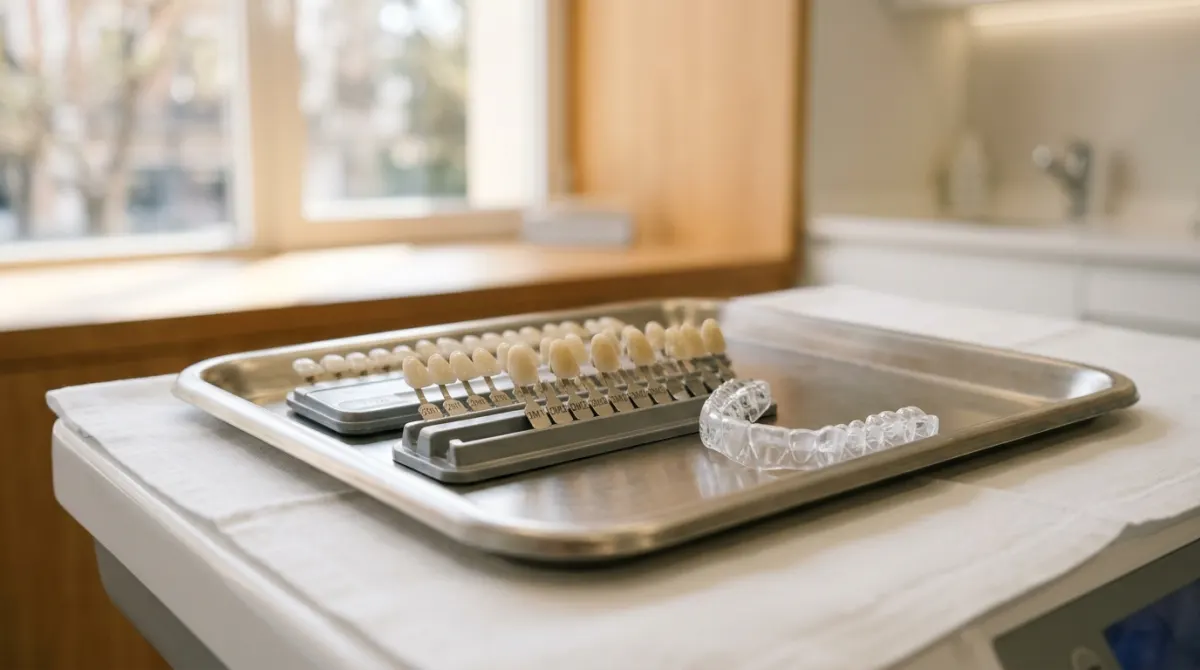
Teeth whitening doesn't lighten fillings, crowns or veneers. What happens with each restoration, the usual order and what's checked before you start.
Teeth whitening lightens your natural teeth, but it doesn't change the colour of fillings, crowns, veneers or bridges. If you have any of these restorations on show, the result can look uneven: the tooth gets lighter and the restoration stays as it was. That's why, before teeth whitening with fillings or crowns, it's worth planning which teeth show when you smile and what will need to be done with them afterwards.
Why doesn't whitening lighten fillings or crowns?
Whitening gel contains peroxide, a product that penetrates the tooth and breaks down the pigments that darken it. This mechanism works on dental tissue. The resin (composite) of fillings, the ceramic of a crown or the porcelain of a veneer are different materials and don't react in the same way: they keep the shade they were made in.
The practical consequence is simple. A filling that matches your colour today may look darker once the teeth around it get lighter. And a crown chosen to match your teeth as they were may end up yellower than the rest of your smile.
What happens with each type of restoration
- Fillings in front teeth. These are the most noticeable. Composite ones can usually be replaced or touched up after whitening to match the new colour.
- Fillings in back teeth. If they don't show when you talk or smile, they don't normally affect the cosmetic result.
- Crowns and bridges. They don't change colour. If they are in the visible area, you may need to consider replacing them so that they don't stand out. Details of these prostheses are on the crowns and bridges page.
- Veneers. They don't get lighter either. If you are planning to have dental veneers, it makes sense to whiten first and choose their colour once you've reached your shade.
- Teeth that have darkened after root canal treatment or a knock. The colour change comes from inside the tooth and external whitening usually does little to improve it. The dentist will assess what alternatives there are for that particular tooth.
The usual order: whiten first, match afterwards
When there are visible restorations, the most common sequence is this:
- Check-up and diagnosis. The dentist looks at why the tooth is darkened and what state the restorations are in.
- Whitening. This can be done in the clinic, with trays at home or with a combination of both. We explain the differences in whitening at home or in the clinic.
- Waiting for the colour to settle. Right after whitening, the shade isn't yet final, and freshly treated enamel doesn't offer the best bonding either. That's why some time is usually left before having new fillings or veneers.
- Replacing what stands out. With the colour now stable, any visible fillings, crowns or veneers are changed and chosen to match the new shade.
Doing it the other way round usually turns out worse: if you change a crown first and then whiten, the new crown can end up darker than the rest again. It's best to know this full plan from the first appointment, because the final result depends as much on the whitening as on what needs redoing afterwards.
The check-up beforehand: decay, gums and leaking fillings
Whitening with professional-strength products requires a clinical examination first. This is set out in the European rules that apply in Spain, which also reserve its first use to a dentist and do not allow it in under-18s. The check-up looks mainly for these problems:
- Tooth decay. Any decay is treated first: gel on a tooth with cavities can cause pain.
- Fillings or crowns with an open edge. A leaking edge can let the gel into the tooth and increase sensitivity. The dentist will assess whether to seal or replace it before whitening.
- Inflamed or receding gums. The gums need to be healthy. If any roots are exposed, this has to be taken into account: the root doesn't whiten in the same way and is more sensitive.
- Tartar and surface stains. A professional dental clean and a good colour assessment help to tell external staining from the tooth's own colour.
Sensitivity: what's normal and when to get advice
The most common complaint is temporary sensitivity to cold during the days of treatment. It usually disappears when you finish and can be controlled by spacing out the applications or using desensitising products. People who already have old fillings, enamel wear or receding gums may notice it more, which is why the regimen is adjusted to each mouth.
Get advice before continuing if the pain is severe, if it appears with no trigger (without having had anything cold) or if it's concentrated in one particular tooth. It may point to a leaking filling or a problem in that tooth that should be checked.
How long the result lasts and how to keep it even
Whitening isn't permanent: over time, coffee, tea, wine or tobacco darken the tooth again. Restorations age in their own way. Ceramic keeps its colour well, whereas composite tends to stain a little over the years. So even if your smile looks even when you finish, small differences can reappear.
To make it last, daily oral hygiene, regular check-ups and cleans, and any whitening top-ups your dentist recommends all help. If a front filling changes colour over time, sometimes it's enough to polish it or touch it up.
When another option may be better
In some cases, whitening and then changing several restorations isn't the most sensible route: many crowns or veneers in the visible area, stains that respond poorly to whitening or teeth with a lot of wear. In those cases your dentist may suggest a different approach, explaining what you gain and what each alternative involves.
If you have fillings or crowns on show and are thinking about lightening your teeth, the sensible thing is to start with an assessment at our teeth whitening clinic, with your restorations in front of the dentist.
Frequently asked questions
If I only have a crown on a back tooth, can I have whitening without any problem?
Generally, yes: if the crown doesn't show when you talk or smile, the colour difference won't be noticeable. Even so, it's worth checking its edge, because if it leaks it can cause sensitivity during treatment.
Does replacing a filling to match the colour damage the tooth?
Each time a filling is replaced, a little of the tooth may be lost when removing the old one. That's why only those that really show and stand out are changed; sometimes polishing or adding a layer of composite is enough.
Can I whiten my teeth if I have veneers on only some of them?
The teeth without veneers can be whitened, but the veneers won't get lighter. If the contrast will be visible, your dentist will explain whether it's better to renew the veneers after whitening or keep your current shade.
Do pharmacy whitening kits work if I have fillings?
They don't lighten restorations either, and without a check-up first you won't know whether a filling is leaking or whether there is any decay. Before using any whitening product, it's best to have a dentist assess your mouth.
Based on reliable sources
Prepared by our team from the references listed below. This is general information and does not replace a consultation.
Article pending review by one of our dentists.
References (4)
- NHS · Teeth whitening (riesgos, sensibilidad y que solo aclara el diente natural) Open
- BOE-A-2012-13170 · Orden que incorpora la Directiva 2011/84/UE: productos blanqueadores con peróxido de hidrógeno (examen clínico, primer uso por odontólogo, no en menores de 18) Open
- Haywood VB, Sword RJ. Tooth bleaching questions answered. British Dental Journal 2017;223:369-380 Open
- Consejo de Dentistas Europeos (CED) · Guía para interpretar la Directiva 2011/84/UE sobre blanqueamiento dental (2012) Open