
Consejos
Published on
Loose dentures: adjustment, reline or a new set?
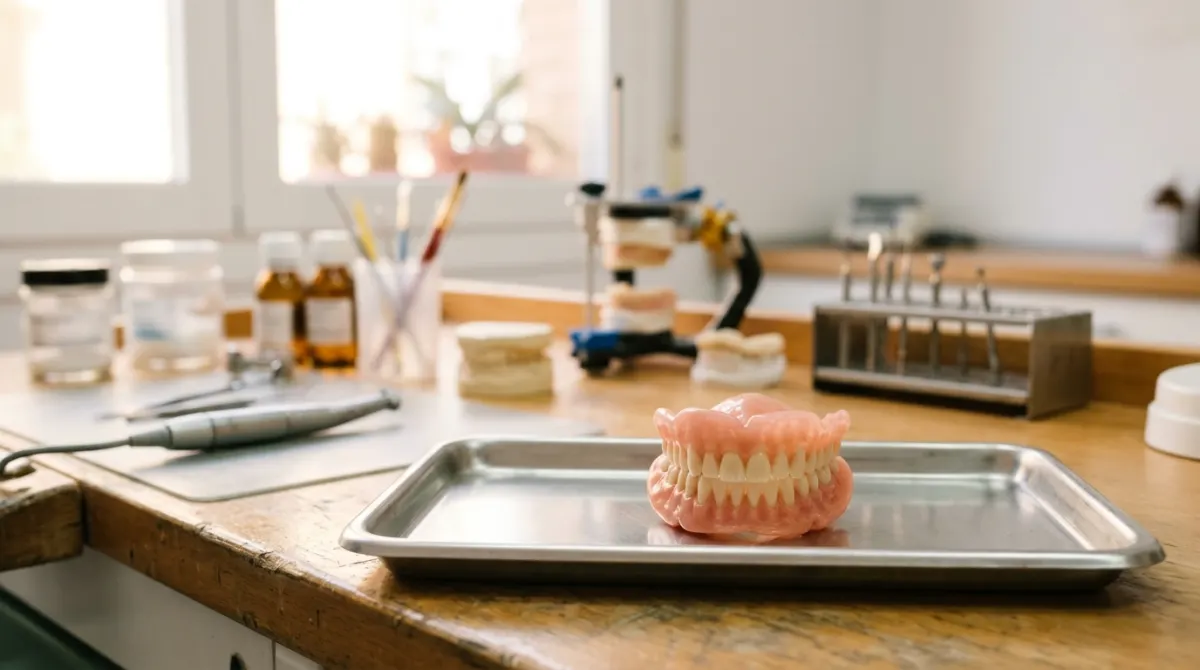
Loose dentures usually come down to changes in the bone and gums. When an adjustment is enough, when you need a reline and when you need a new set.
If you have loose dentures that didn't move before, the most likely reason is that your mouth has changed. After losing your teeth, the bone and gum that support the denture gradually shrink over the years, and the base no longer fits as it did on day one. The solution may be an adjustment, a reline or a new denture; using more and more adhesive doesn't correct the cause.
Why do dentures that used to fit start to move?
- The bone gradually shrinks. When a tooth root is missing, the bone that held it slowly loses volume. This happens faster in the months after extractions, but continues for years. That's why dentures fitted right after teeth are taken out usually need adjustments or a reline once the mouth has finished healing.
- The denture wears. Acrylic teeth wear down with chewing and your bite changes. The base can also warp or crack.
- With partial dentures, the supports change. If the denture is held by your own teeth, it only takes a loose clasp, or one of those teeth moving or being lost, for it to stop being firm.
- Less saliva. Saliva helps a full denture create suction. Some medicines and illnesses dry the mouth, and then the hold gets worse.
Signs that your denture should be checked
- It lifts or wobbles when you talk, laugh or chew.
- Food easily gets underneath it.
- You get sore spots or ulcers in areas that didn't bother you before.
- You need more and more adhesive to get through the day.
- You bite your cheeks or tongue, or notice that your teeth don't meet as they did.
- Your face looks more sunken around the mouth.
Adjustment, reline or new denture: what's the difference?
The decision is made at the clinic, after looking at the gum, the remaining bone, your bite and the condition of the denture itself.
Adjustment
This is a one-off touch-up: an area that rubs is eased, the contact between the teeth when you bite is corrected or a clasp on a partial denture is tightened. It works when the base still sits well and the problem is localised. It can usually be sorted out at the same visit.
Reline
This involves adding material to the inside of the denture so that it copies the current shape of your gum again. It restores stability without changing the denture's teeth. It's suitable when the denture is in good condition but no longer fits because its support has changed. Depending on the case, it can be done directly at the clinic or sent to a dental laboratory.
New denture
This is considered when the problem isn't just the support: very worn teeth, a bite that has changed, a fractured or heavily repaired base, or a denture that has already been relined several times. In these cases, further relining usually gives worse and worse results.
If you'd like to go over the types of denture available (acrylic partial, chrome partial or full), we explain them on the removable dentures page.
Adhesive helps, but it doesn't fix the problem
Denture adhesive can give you confidence with a denture that fits well. What it can't do is make up for a base that no longer fits: if you need more and more of it, that's a sign your denture should be checked.
It's also best not to use home reline kits, or to file, bend clasps or glue a broken denture yourself. You can alter your bite or damage the denture beyond repair.
Mouth ulcers that won't heal: when to get advice
A denture that moves rubs, and constant rubbing ends up causing an ulcer. It usually improves within a few days once the rubbing is corrected. In the meantime, if it's very uncomfortable, leave your denture out for as long as you can and book an appointment to have it adjusted, rather than putting up with it.
Get advice without waiting if you have an ulcer that hasn't healed in about three weeks, a white or red patch that doesn't go away, a lump or unexplained bleeding. Most of the time there is a simple cause, but any lesion in the mouth that persists should be seen by a professional.
It's also worth mentioning if you notice redness on the roof of your mouth under the denture, a burning feeling or cracks at the corners of your mouth. These may be related to denture hygiene or to sleeping with it in.
When a denture never quite stays in place
In some mouths, so little bone is left over time that a conventional denture moves even when it's well made, especially in the lower jaw. In these cases there are two options your dentist can consider with you:
- Implant-retained overdenture. It is still a denture that you take out to clean, but it clips on to a few dental implants, which greatly reduces movement when eating and talking.
- Fixed prosthesis on implants. A complete arch screwed to several implants, which only the dentist can remove. This is known as full-mouth dental implants, with techniques such as All-on-4.
Neither option suits everyone. They depend on the bone available, which is assessed with X-rays and sometimes a 3D scan, on your general health and on what each person prefers. A well-fitted conventional denture remains a valid option. You can compare all the alternatives in types of dental prosthesis.
Get your denture checked even if it doesn't bother you
Changes in the bone are slow and often go unnoticed until the denture is already moving. A regular check-up, even if you have no discomfort, allows it to be adjusted or relined in good time and the gum and lining of the mouth to be monitored. If your denture no longer stays in place, book an appointment for dental prosthetics and we'll assess it with your mouth in front of us.
Frequently asked questions
Can I sleep with my dentures in?
It's usual to take them out at night to give your gums a rest and clean them, unless your dentist tells you otherwise in your case. Keep them clean and in water or a denture solution so that they don't warp.
Will I be left without my dentures while they're relined?
It depends on the type of reline. Some can be done at the same appointment; others require sending the denture to a laboratory, and then you may be without it for a while. Ask how long before you leave it.
How often do dentures need replacing?
There's no fixed date: they can last for years if they're looked after and relined in good time. They are replaced when the teeth are very worn, the base is damaged or relines no longer get them to sit properly.
My denture has broken. Can it be repaired?
Many fractures of the base or a tooth coming loose can be repaired. Keep all the pieces and don't stick it with household glue, because this makes the repair harder and can irritate your gum.
Based on reliable sources
Prepared by our team from the references listed below. This is general information and does not replace a consultation.
Article pending review by one of our dentists.