
Consejos
Published on
Knocked-out tooth: what to do if it's a baby tooth or an adult tooth
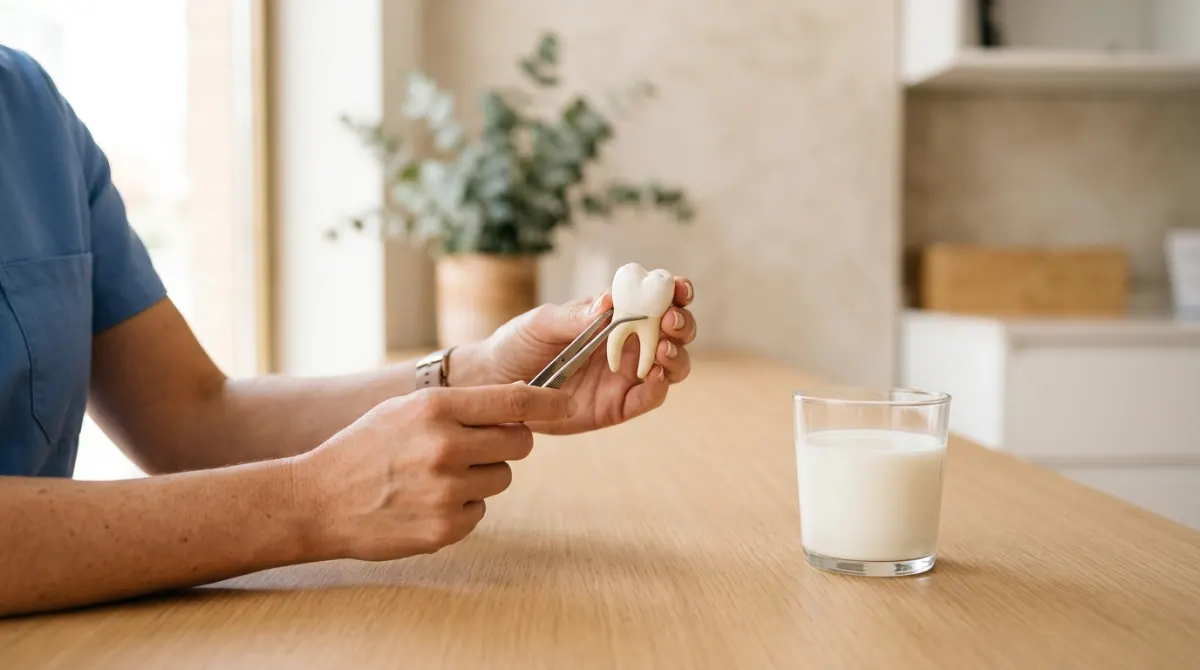
Knocked-out tooth: how to hold it, when to put it back, what to carry it in and why a baby tooth isn't put back in. The steps in the guidelines.
If you have a knocked-out tooth after a blow, the first thing is to find out whether it's a baby tooth or an adult tooth. An adult tooth should be put back in place as soon as possible, because the first few minutes decide whether it can be saved. A baby tooth, on the other hand, isn't put back. In both cases you need to go to the dentist without delay.
Before the tooth, the person
If the blow was to the head and there is loss of consciousness, dizziness, vomiting, a wound that is bleeding heavily or a suspected broken jaw, medical attention comes first: the hospital emergency department or 112. The tooth can travel in a glass of milk with the person, but it mustn't delay that attention.
Baby tooth or adult tooth?
As a guide, baby incisors are replaced at around 6-8 years, and from that age the front teeth are usually adult teeth. In a child under 6, a tooth knocked out by a blow is almost always a baby tooth. An adult tooth has a long, complete root; a baby tooth that is about to come out may have a short or almost non-existent root.
If you aren't sure, don't try to put it back: keep it in milk and go immediately. A call to the clinic on the way helps to save time. Have to hand the person's age, the time of the blow and whether the tooth has been put back or what you are carrying it in: this information helps to prepare for your treatment.
Knocked-out adult tooth: the first few minutes
International guidelines recommend, in this order:
- Stay calm and find the tooth.
- Pick it up by the crown, the white part you can see in the mouth. Don't touch the root.
- If it's dirty, rinse it briefly in milk, saline solution or the person's own saliva. Don't rub it, brush it or use soap or disinfectant: there are living cells on the root, and these are what can help it reattach.
- Try to put it back in its socket, with the correct side facing out, and ask the person to bite on a tissue or some gauze to hold it in place.
- If that isn't possible (a child who won't cooperate, a person who is dazed, a wound that prevents it), put it straight away in a glass of milk. If there isn't any, saline solution or saliva spat into a glass will do. Water is a poor choice, although it's better than letting it dry out. Don't wrap it in paper or a dry tissue.
- Go to the dentist immediately, with the tooth.
Time really does matter. The root starts to dry out within minutes; after half an hour out of the mouth and dry, most of the cells covering it no longer survive, and after an hour the chances of the tooth lasting in the long term are slim. Even so, it's almost always worth putting it back: it preserves the bone in the area and leaves other options open for later on.
What the dentist will do
The usual approach is to clean the area, check with an X-ray that the tooth is in the right position and attach it to the neighbouring teeth with a flexible splint for about two weeks. In teenagers and adults whose root is fully formed, root canal treatment is usually needed in the following weeks; in children whose root is still growing, the nerve sometimes recovers and is closely monitored. The dentist will also consider whether antibiotics are needed and check your tetanus vaccination, especially if the tooth fell on the ground or there was soil.
During those weeks you are advised to eat a soft diet, use a soft toothbrush after every meal, use any mouthwashes you are told to and avoid contact sports. X-ray check-ups then follow for years, because some complications, such as the root gradually wearing away, appear late. If the tooth ultimately can't be kept, there are alternatives for replacing it, such as dental implants in adults, which are planned without rushing.
If it's a baby tooth: it isn't put back
A knocked-out baby tooth shouldn't be put back. The adult tooth is forming just above its root, and pushing it back into the socket could damage it. What you should do:
- Control the bleeding by having your child bite on some gauze or a clean tissue.
- Keep the tooth, even though it won't be put back, and bring it to the appointment. If you can't find it, it's important for the dentist to take a look: it may have been pushed up into the gum.
- Book a check-up soon. The area and the neighbouring teeth are checked and, at later check-ups, how the adult tooth is developing.
This follow-up is part of seeing a paediatric dentist, who also assesses knocks that don't knock the tooth out. A baby tooth that has been knocked and stays in the mouth but changes colour days later, becomes looser or has swollen gum next to it also deserves a check-up.
How to prevent knocks to the teeth
Many dental injuries happen during sport. A mouthguard is recommended for contact sports, ideally custom-made, because standard-size ones fit less well and protect less. If a blow has broken or moved a tooth without knocking it out, that is also an emergency: on the dental emergencies page we explain what to do on your way to us.
Frequently asked questions
Is there any point in putting it back if more than an hour has passed?
The chances of the tooth lasting for many years are lower, but the guidelines consider that it's almost always right to put it back: it maintains the bone and appearance while the permanent solution is decided. The dentist will assess this at the emergency visit.
Why shouldn't the tooth be rinsed under the tap?
Water doesn't have the right composition and damages the living cells on the root. Milk, saline solution or saliva are better for rinsing or carrying it. If only water is available, that's better than leaving it dry, without rubbing and for as short a time as possible.
What if the tooth has only broken or moved?
You also need to go as soon as possible. If it has broken, keep the fragment in milk or saline solution; if it has shifted, don't force it yourself: the dentist will reposition and stabilise it.
Do I need a tetanus jab?
It depends on your vaccination status and whether the wound has been soiled with dirt. Mention it at your appointment and, if you aren't sure when you were last vaccinated, check with your doctor or nurse.
Based on reliable sources
Prepared by our team from the references listed below. This is general information and does not replace a consultation.
Article pending review by one of our dentists.
References (3)
- Fouad AF et al. IADT guidelines for the management of traumatic dental injuries: 2. Avulsion of permanent teeth. Dent Traumatol 2020;36:331-342 Open
- Day PF et al. IADT guidelines for the management of traumatic dental injuries: 3. Injuries in the primary dentition. Dent Traumatol 2020;36:343-359 Open
- Consejo General de Dentistas. 1 de cada 3 lesiones dentales en niños ocurren durante la práctica deportiva (2024) Open