
Consejos
Published on
Sports dentistry: gum shields and how to protect your mouth in sport
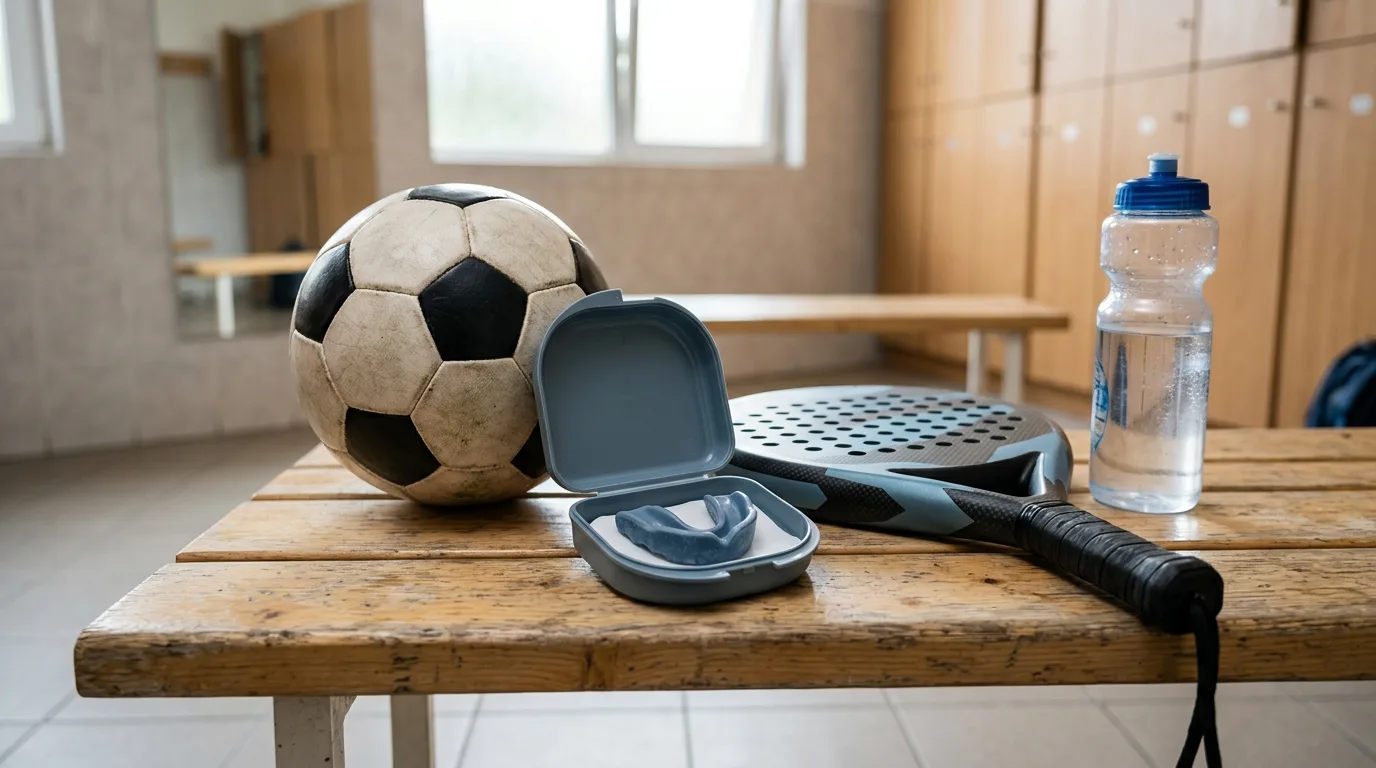
Common dental injuries in sport, which gum shield to choose (shop-bought, boil-and-bite or custom-made) and what to do if a knock breaks a tooth.
What is sports dentistry?
Sports dentistry is the branch of dentistry that deals with preventing and treating sports-related injuries to the mouth, as well as the oral health problems that can affect people who train regularly. You don't have to compete for it to matter to you: a ball in the face, a fall from a bike or an elbow under the basket is enough to break a tooth.
It works on three fronts: prevention, with the gum shield as the star; treating the injury once it has happened; and looking after the mouth of people who play sport, which carries its own risks.
The most common dental injuries in sport
The teeth that suffer most are the upper incisors, the first to take the impact, especially if they stick out beyond the lower ones. These are the most common injuries:
- Crown fracture. A piece of the tooth breaks off; if the break reaches the dentine or the nerve, there is usually sensitivity or pain.
- Loosened or displaced tooth. It is left loose, crooked, pushed up into the gum or out of its position. This is what dentists call luxation.
- Tooth knocked out completely. This is the most urgent injury: the chances of saving it depend very much on how long it spends out of the mouth.
- Root fracture. It cannot be seen from the outside and is often only detected on an X-ray.
- Cuts to the lips, tongue and cheeks, caused by the teeth themselves when they take the blow.
- Blows to the jaw and the jaw joint, less common, which can leave pain when chewing, difficulty opening the mouth or a fracture.
A tooth that looks intact after a knock may have suffered damage to the nerve that only shows up later, for example as darkening of the tooth. That is why a check-up is worthwhile even if it doesn't hurt.
Gum shields: shop-bought, boil-and-bite and custom-made
There are three types, and they differ mainly in how well they fit your mouth:
| Type | How you get it | What you should know |
|---|---|---|
| Shop-bought (stock) | It is bought ready to use, in a few sizes. | It is the most accessible, but because it is not fitted to your mouth it can move about and make it harder to speak or breathe, and many athletes end up taking it out. |
| Boil-and-bite | It is softened in hot water and then bitten into so that it takes the shape of your teeth. | It fits better if the instructions are followed carefully; if the moulding ends up uneven or too thin, it protects less. |
| Custom-made | The dentist makes it from an impression or scan of your mouth. | It is the one that fits best and the most comfortable for speaking and breathing. It requires a visit to the dentist and is the most expensive. |
Fit matters because a gum shield that doesn't move or bother you is a gum shield that stays in for the whole match. Even so, a well-fitted shop-bought or boil-and-bite one is better than not wearing one at all.
How to look after your gum shield
- Rinse it and clean it with a brush after each use, and let it dry before putting it away.
- Keep it in a rigid, ventilated case and away from heat, which can warp it.
- Take it to your check-ups and replace it if it is broken, misshapen or no longer fits. In children and teenagers it becomes too small sooner, because the mouth changes as they grow.
Which sports should you wear a gum shield for?
The American Dental Association recommends one not only for contact sports, but also for those in which a blow can come from a fall, a ball, a racket or an accidental collision. As a rough guide:
- Contact and combat sports: boxing, martial arts, wrestling, rugby or hockey. In some of them, the rules require it.
- Team sports with frequent collisions: basketball, handball, football or water polo.
- Risk of falls: cycling, skating, skateboarding, skiing, horse riding or gymnastics.
- High-speed balls or rackets: squash, baseball or softball.
If you wear a brace, a blow can damage it and cut your lips and cheeks; your dentist or orthodontist will tell you which gum shield is compatible with it. And with children who train often, it is a good idea to get them used to wearing one from the start.
If a knock breaks or knocks out a tooth
A broken or knocked-out tooth is a dental emergency: the sooner it is treated, the better the chances of saving it. Recover the tooth or the fragment and see a dentist as soon as possible. What to do step by step on your way there, how to pick it up and where to keep it are all explained on our dental emergencies page.
If the blow to the face or head was hard and there is loss of consciousness, dizziness, vomiting, bleeding that won't stop or difficulty opening or closing the mouth, the tooth is not the priority: go to a hospital emergency department or call 112. After a blow to the head, do not return to play that day without being assessed by a professional.
And even if the knock seems minor, ask for a check-up: some injuries only become noticeable after a while.
Oral health and performance: what has been proven and what hasn't
Playing sport is good for your general health, but it does not protect your mouth. In a study of 302 athletes seen during the 2012 Olympic Games, 55% had tooth decay and 18% said their oral health was affecting their performance (Needleman et al., British Journal of Sports Medicine, 2013). A later study by the same team, of 352 elite and professional athletes, found untreated decay in nearly half, and almost a third felt that their mouth affected their training or performance, even though the vast majority said they brushed twice a day.
These figures are reported by the athletes themselves: they show that the problem is common, but they do not measure how much performance is lost. Among the causes, the researchers point to sports drinks, gels and bars, which provide sugar and, in many drinks, an acidity that wears away enamel. It helps to alternate them with water, to avoid sipping them for hours when there is no need and to keep up with check-ups; here we explain how often you should have your teeth professionally cleaned.
What has not been proven is that a "performance" mouthguard makes you stronger or faster: a 2021 systematic review of 27 studies found contradictory results for strength, power and agility, largely because each study measured it differently and used different mouthguards. Nor is it clear that it prevents concussion: some studies suggest a moderate effect, but the evidence is not conclusive and it is no substitute for a helmet or for the safety rules of each sport. Its well-established role is protecting the teeth, lips and mouth, and for that it is worth wearing one.
If you play a sport with a risk of knocks and want a gum shield made for your mouth, on our General dentistry page you will find out how we work and how to book a check-up.
Based on reliable sources
Prepared by our team from the references listed below. This is general information and does not replace a consultation.
Article pending review by one of our dentists.
References (4)
- American Dental Association (ADA). Athletic Mouth Protectors (Mouthguards) Open
- Needleman I et al. (2013). Oral health and impact on performance of athletes participating in the London 2012 Olympic Games: a cross-sectional study Open
- Gallagher J et al. (2018). Oral health and performance impacts in elite and professional athletes Open
- Miró A et al. (2021). Acute Effects of Wearing Bite-Aligning Mouthguards on Muscular Strength, Power, Agility and Quickness in a Trained Population: A Systematic Review Open