Tratamientos
Published on
Dental mock-up: how to try out your new smile before you start
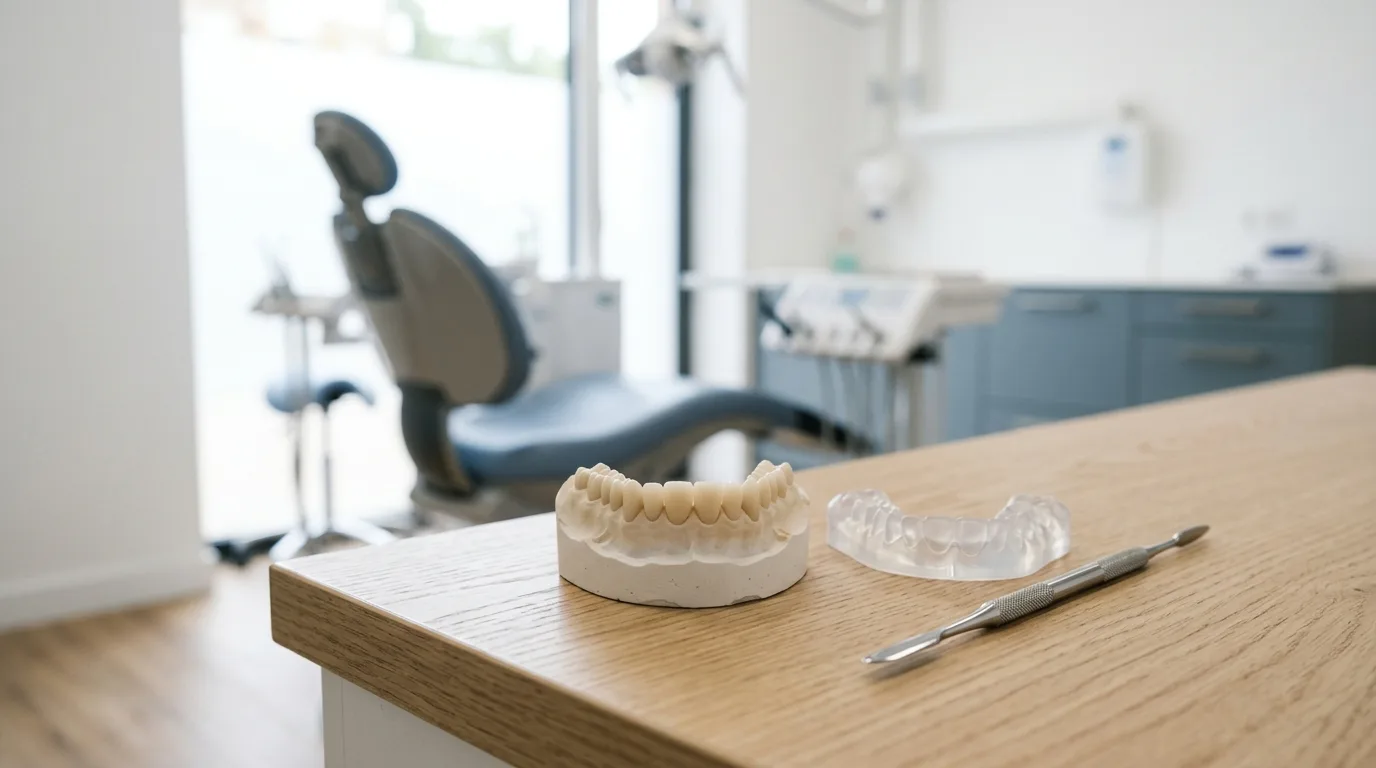
What a dental mock-up is, how it is prepared with digital smile design, how the trial in the mouth works, which treatments it suits and what it shows.
What is a dental mock-up?
A dental mock-up is a temporary model of the teeth that is placed over your own so that you can see, on your face and in your smile, how a cosmetic treatment might look. It is made with a tooth-coloured temporary resin that sits over the teeth without altering them.
Its value lies in turning a proposal into something you can see and talk about: the length of the teeth, the shape of their edges, the proportions between them or how much they show when you talk and smile. It is a communication and planning tool between you and your dentist, not a treatment. It fits into the overall approach we explain in cosmetic dentistry and smile design.
From digital smile design to the mock-up
The mock-up is the last step of a planning process that starts earlier:
- Records. Photographs are taken of your face and smile, sometimes a short video while you talk and smile, plus a scan of your mouth or impressions. The video helps to show how your lips move and how much tooth you show when you speak, something a still photo cannot capture.
- Design. Using these records, your smile is studied in relation to your face: the lip line, the midline of the face, the proportions of the teeth. This can be done with digital smile design software or by modelling the new shape in wax on a replica of your teeth. Either way, the result is a proposed shape and size for each tooth.
- Transfer to the mouth. From that design, a physical model of your teeth with the new shape is produced and, from it, a key: a kind of mould that allows the design to be reproduced in your mouth.
How the trial in the mouth is done and how long it takes
The trial takes place at the clinic, usually in a single appointment:
- the teeth are cleaned and dried;
- the key is filled with the temporary resin and held over the teeth for a few minutes, until the material sets;
- the key is removed, any excess is cleared away and the edges are tidied up.
Then comes the important part: looking at yourself in the mirror, smiling, talking, taking photos and telling the dentist what you like and what you would change. Small adjustments are often made to the mock-up itself, or the design is revisited and modified.
Placing it takes very little time; how long the appointment lasts depends mainly on the conversation and the adjustments. It is usually removed at the end. In some cases, the dentist may suggest wearing it for a while to judge it in everyday life; if so, they will explain how to look after it, because it is a temporary and fragile material.
Which treatments is it used for?
A mock-up makes sense when treatment is going to add volume or change the shape of the teeth that show when you smile:
- Veneers, composite or porcelain. This is its best-known use; you can read more about them on our dental veneers page.
- Crowns on the front teeth, when you want to see the new shape before they are made.
- Reshaping with composite: lengthening worn edges, closing small gaps or evening out teeth of different sizes.
- More extensive treatment, for example when the height of very worn teeth is going to be restored.
It also helps to decide on the plan. Sometimes it shows that orthodontic treatment or gum contouring would be advisable before veneers, or that the desired effect can be achieved with fewer teeth than expected. On the other hand, it cannot be used to try out teeth whitening, which changes the colour and not the shape.
What it can and cannot predict
A mock-up is a reversible simulation. It is very useful, but it has limits that are worth knowing about so that there are no surprises:
| What it lets you judge | What it does not predict exactly |
|---|---|
| The shape and length of the teeth | The colour and translucency of the final material |
| The proportions between the teeth | The finish and shine of the final porcelain or composite |
| How they suit your lips and your face | The real thickness: because it sits on top of the tooth, the mock-up may look slightly bulkier |
| Whether the new length feels comfortable when you speak | Changes in the gum that require another treatment |
The final result also depends on the condition of your mouth, the material chosen and how each patient responds. That is why a mock-up guides you and helps you decide, but it does not guarantee how the treatment will turn out.
Does it hurt? Do my teeth have to be altered?
In most cases, the mock-up is placed over the teeth just as they are, without filing them down or giving any anaesthetic. You may feel some pressure when the key is put in and, while you are wearing it, an odd sensation of bulk. Afterwards it is removed, and if any resin is left behind it is polished off at the same appointment.
There is one limitation worth knowing about: because the mock-up is added on top, it cannot show how a tooth would look if it sat further “in” than it does now. If the design calls for this, the dentist will explain how it would be achieved in the actual treatment, which in some cases may include orthodontics first.
If you are thinking about changing the shape of your teeth, our cosmetic dentistry in Málaga team will assess your case and explain whether a mock-up could help you decide.
Based on reliable sources
Prepared by our team from the references listed below. This is general information and does not replace a consultation.
Article pending review by one of our dentists.
References (4)
- Kovacs BO et al. (2011). Aesthetic smile evaluation--a non-invasive solution Open
- Garcia PP et al. (2018). Digital smile design and mock-up technique for esthetic treatment planning with porcelain laminate veneers Open
- Magne P, Belser UC (2004). Novel porcelain laminate preparation approach driven by a diagnostic mock-up Open
- American Dental Association (MouthHealthy). Veneers Open