
Preimplantation genetic testing: analysing the embryo before transfer
It is a test carried out on embryos from in vitro fertilisation (IVF), before they are transferred to the womb. It is intended for specific cases and does not improve every treatment.
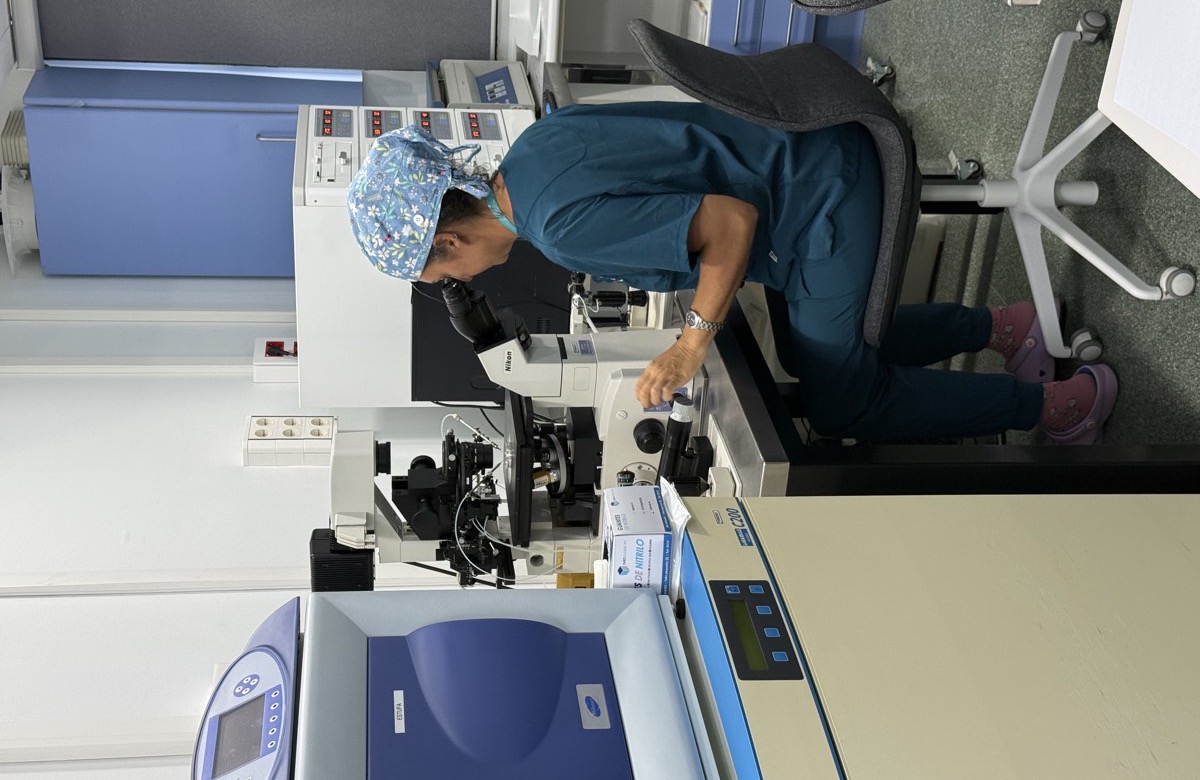
Preimplantation genetic testing (PGT; in Spanish, DGP) analyses a few cells from each embryo obtained through in vitro fertilisation. This shows whether it has a specific genetic abnormality. Its clearest indication is a serious hereditary disease in the family, or a chromosomal abnormality in one of the parents. It is also offered to count the embryo's chromosomes, especially from a certain age. In that use its usefulness is debated: ask what you would gain in your case. It reduces the risk, but does not guarantee a pregnancy or a healthy child.
Three different tests with the same name
| What is looked for | For whom | Example |
|---|---|---|
| A disease caused by a single gene (PGT-M) | Families with an identified hereditary disease | Cystic fibrosis, some muscular dystrophies |
| A rearrangement of the chromosomes (PGT-SR) | People who carry an abnormality in the structure of their chromosomes | A balanced translocation |
| The number of chromosomes (PGT-A) | Considered in some cases; its usefulness is debated | Embryos with an extra or missing chromosome |
How it is done
Preliminary work-up. When a specific disease is being looked for, the test first has to be tailor-made. To do this, the person who carries the family variant is tested, even if they have no symptoms, and, if necessary, other relatives. It can take weeks.
In vitro fertilisation. PGT always requires in vitro fertilisation, usually with microinjection (one sperm is injected into each egg), even if the couple has no problems conceiving.
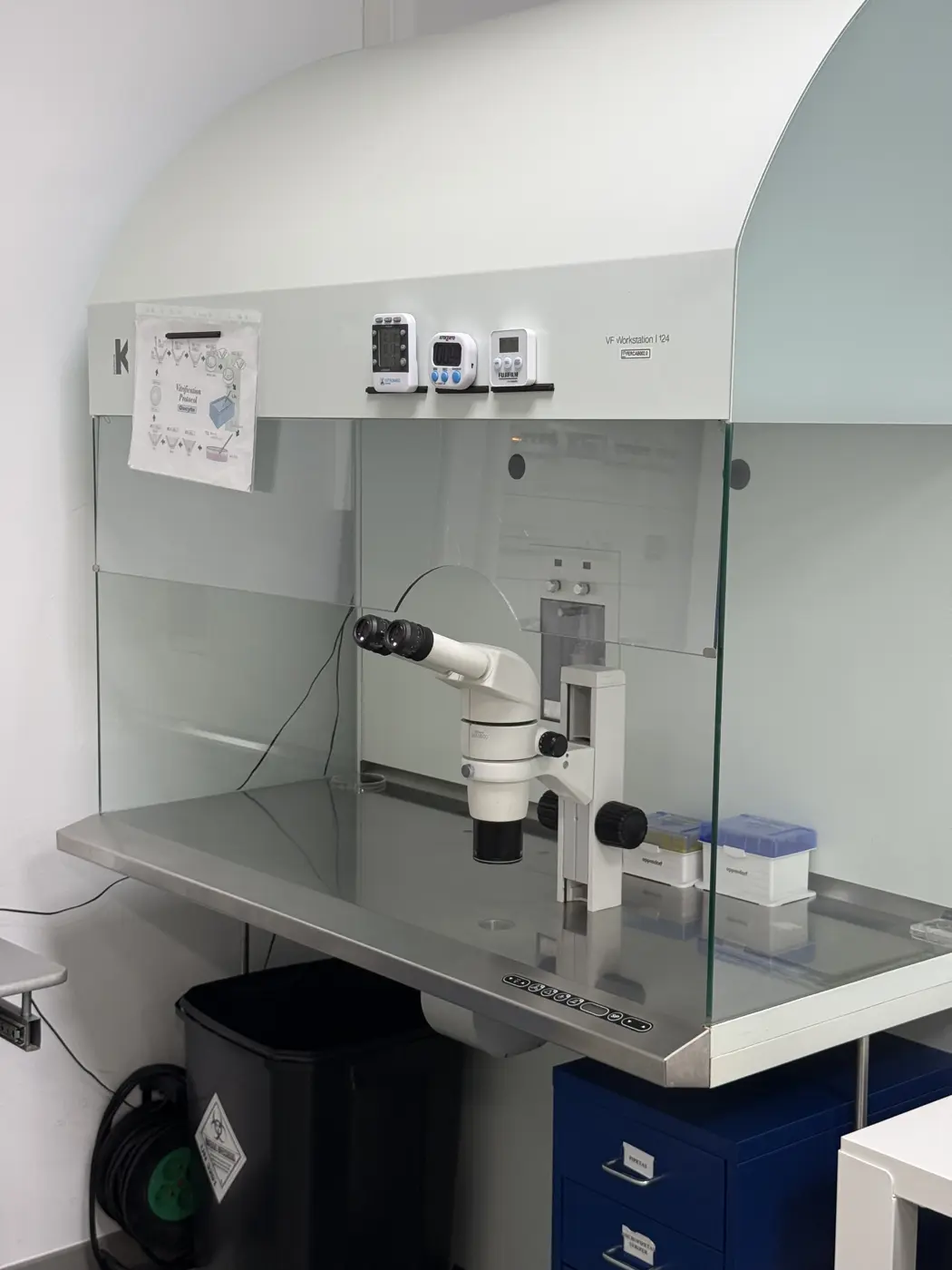
Embryo biopsy. In the laboratory a few cells are removed, usually between the fifth and seventh day of development [28].
Analysis. While they are being analysed, the embryos usually remain vitrified.
Transfer. In a later cycle, one of the embryos that does not have the abnormality tested for is transferred.
What you should know beforehand
- It is not infallible. Only a few cells are analysed, and sometimes they do not represent the whole embryo. That is why, if there is a pregnancy, confirmation with prenatal diagnostic tests is offered [27].
- It only finds what it sets out to look for. A normal result for one disease does not rule out others.
- There may be no embryo left to transfer, either because they all have the abnormality or because the result is inconclusive.
- Counting chromosomes has not been shown to help prevent further losses in people who have had recurrent miscarriages without a genetic cause. European guidelines consider the evidence insufficient [17].
- The biopsy is performed on the embryo and can damage it. Done at this stage, when the embryo already has many cells, that risk is lower, but it is not zero.
What the law allows in Spain
Spanish law [13] authorises preimplantation genetic testing, with notification to the health authority, in two situations:
- Detecting serious hereditary diseases that appear early in life and have no curative treatment.
- Detecting abnormalities that compromise the viability of the embryo.
Any other purpose requires express authorisation, case by case, with a favourable report from the Spanish National Commission on Assisted Human Reproduction (CNRHA). This is the case, for example, when selecting an embryo that is compatible with a sick sibling. Choosing the sex or any other trait without a medical reason is not allowed: sex is only taken into account when it helps to avoid a serious hereditary disease linked to it.
Before deciding, there is a genetic counselling appointment. It explains what risk there is in your case, what the test can detect and what alternatives exist.
Frequently asked questions
What is PGT?
A genetic test carried out on embryos from in vitro fertilisation before they are transferred, to find out whether they have a specific abnormality.
For which diseases can preimplantation genetic testing be done?
For serious hereditary diseases that appear early in life and have no curative treatment, and for abnormalities that compromise the embryo's viability. In those cases the law allows it without case-by-case authorisation. Any other use requires express authorisation.
Does PGT guarantee a healthy baby?
No. It reduces the risk of passing on the abnormality being tested for, but it is not infallible and it does not rule out other diseases. That is why, if there is a pregnancy, confirmation with prenatal diagnosis is usually offered.
Can you choose the baby's sex with PGT?
Not as a preference: in Spain it is prohibited. Sex is only taken into account when it helps to avoid a serious hereditary disease linked to it.
Do you need IVF to have PGT?
Yes. The embryos have to be in the laboratory to be analysed, even if the couple has no problems conceiving.
So, what is your next step?
Answer a few questions and the pre-diagnosis will tell you which stage you are at and what is worth assessing in a consultation. It is free and you see the result straight away, without leaving your details.
Sources
- Ley 14/2006, sobre técnicas de reproducción humana asistida. BOE, 2006.
- Pérdida gestacional recurrente: guía para pacientes. ESHRE, 2022.
- ESHRE PGT Consortium good practice recommendations for the organisation of PGT. ESHRE, Human Reproduction Open, 2020.
- Good practice recommendations for polar body and embryo biopsy for PGT. ESHRE PGT Consortium and SIG Embryology, Human Reproduction Open, 2020.
The numbers in square brackets in the text refer to this list.