
Egg donation: what it involves, step by step
Donating eggs helps other people have children. It is also a medical procedure, with medication, sedation and an egg retrieval. That is why we tell you everything, including the less comfortable parts, before you decide anything.
Women aged 18 to 35 in good physical and mental health who pass a compulsory medical assessment can donate eggs. The process involves 10 to 12 days of injections and an egg retrieval under sedation. It carries risks you should know about. Under Spanish law, donation is voluntary, altruistic and anonymous.
Who can donate
- Age: over 18 and no older than 35 [20].
- Health: good physical and mental health, and being an adult able to make decisions for yourself [13].
- History: no genetic, hereditary or infectious diseases that could be passed on, either your own or in your immediate family [20].
- Compulsory assessment: interview, psychological assessment, gynaecological examination, blood tests, and genetic and infection screening [20].
The assessment may uncover something you did not know, for example that you carry a genetic change or that you have an infection. We will tell you and explain what it means. If you are not accepted as a donor, you have the right to know why. It is not a judgement on you: the rules are designed to protect your health and that of the children who are born.
Egg donation, from start to finish
Five steps. Right up to the egg retrieval you can change your mind, even if you have already signed.
How the process works
Information consultation. We explain everything and answer your questions. It does not commit you to anything.
Assessment. If you decide to go ahead, the medical assessment is carried out. With the results, we tell you whether you can donate.
Stimulation. For 10 or 12 days you give yourself injections under the skin at home. They make several eggs mature at the same time. During this time you come in for several ultrasound check-ups.
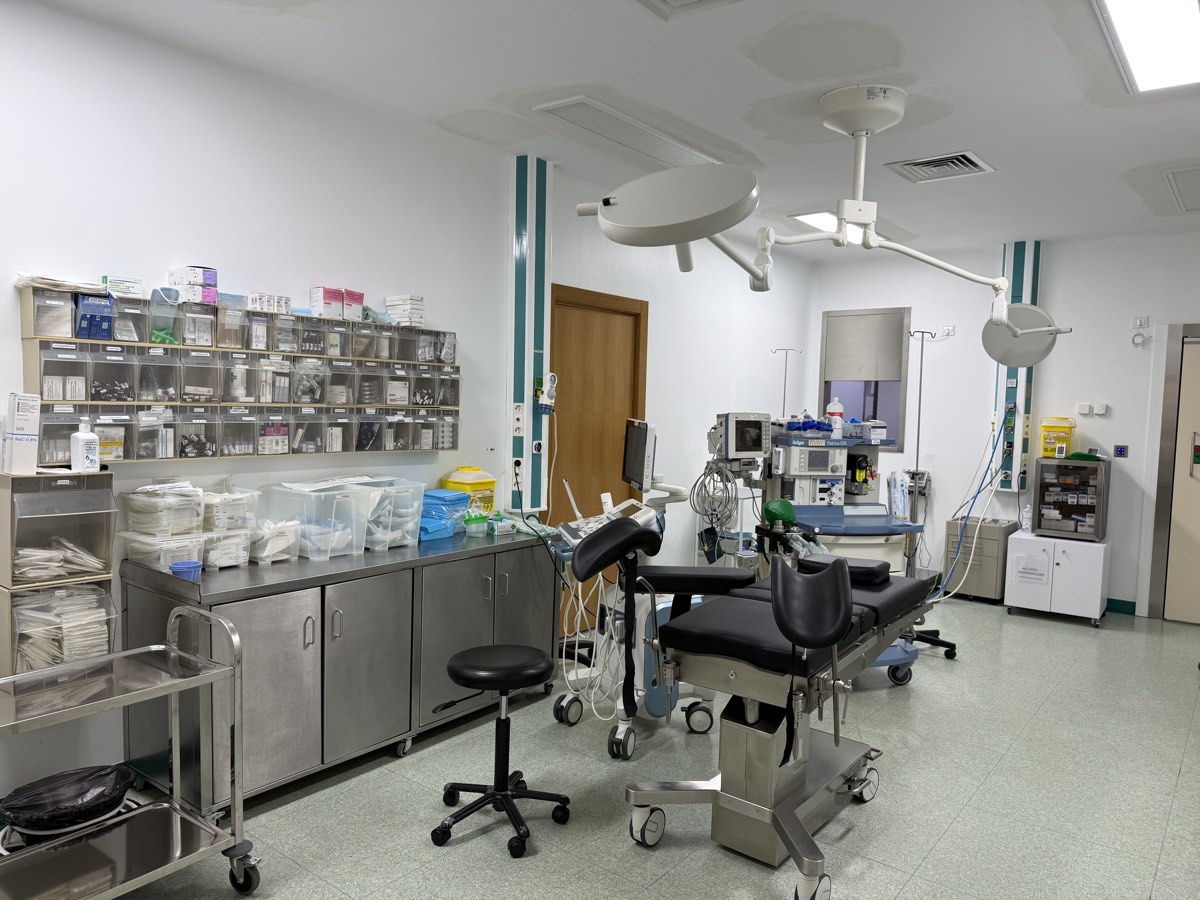
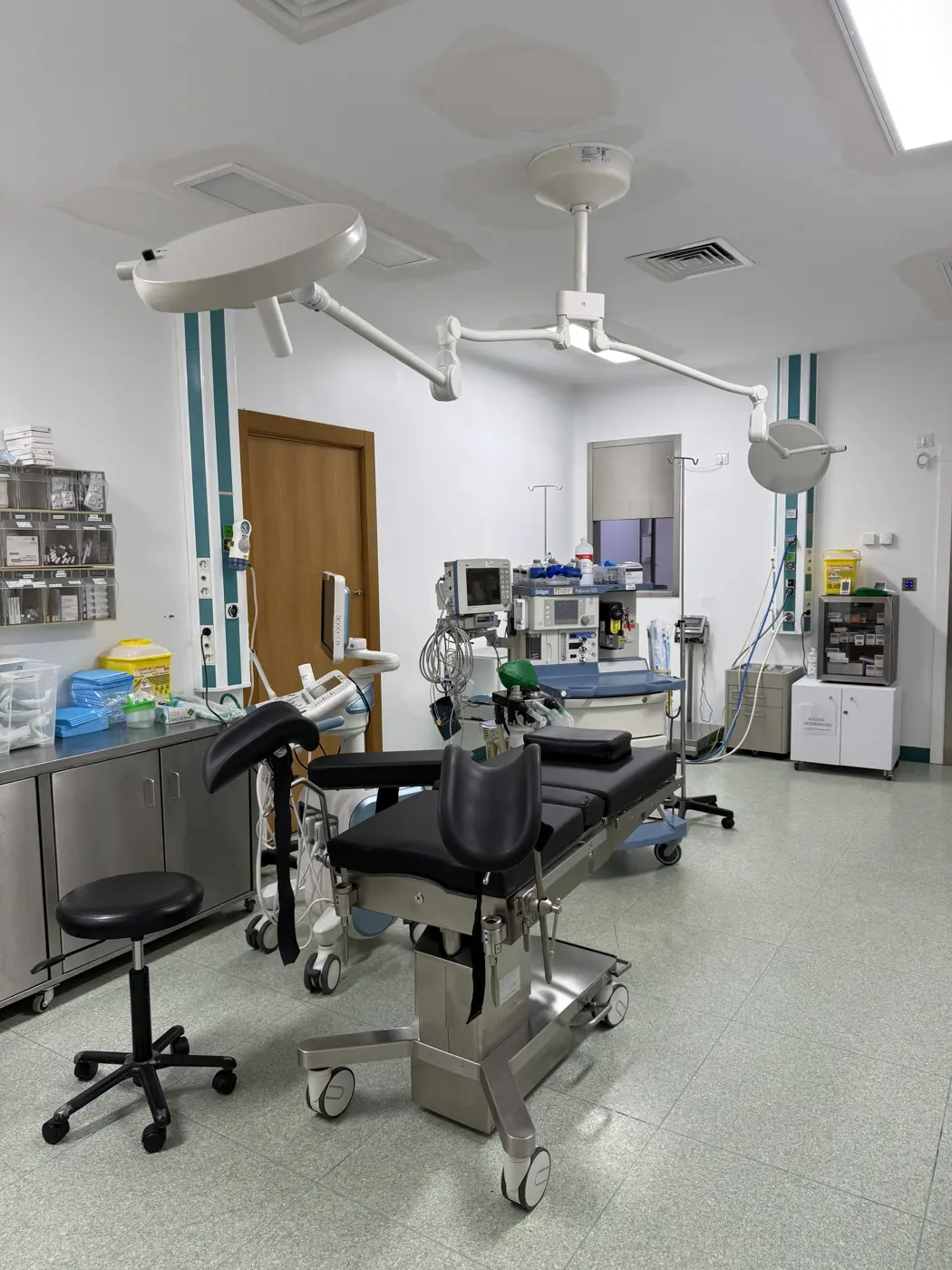
Egg retrieval. The eggs are collected in the operating theatre, under sedation. It takes 10 to 15 minutes and you go home the same day, with someone to accompany you.
Afterwards. We explain what is normal to feel, which symptoms mean you should call us and how to reach us.
The whole process, from preparation to egg retrieval, usually takes about forty days and needs at least seven visits to the clinic.
The risks, explained clearly
Egg donation is a medical procedure, with medication, sedation and an egg retrieval. It carries risks, and you have the right to know about them before signing anything [23][24]:
- Ovarian hyperstimulation syndrome (OHSS): the ovaries over-respond to the medication. The mild form (bloating, tummy discomfort, nausea) is not unusual and usually settles on its own within a few days. The severe form is uncommon, but it does happen: it can mean a hospital admission and, in exceptional cases, cause thrombosis. The medication is chosen and adjusted to reduce this risk. The check-ups are there to catch it in time.
- From the egg retrieval: discomfort in the following days, similar to period pain. Rarely, internal bleeding, infection or ovarian torsion (the enlarged ovary twists on itself). These complications are uncommon, but they can require a hospital admission or an operation.
- From the sedation: the same as for any anaesthetic, which the anaesthetics team will explain to you.
- During the cycle: a swollen tummy. During those days it is also easier to get pregnant; we will tell you what precautions to take.
If, after the egg retrieval, the pain is severe or getting worse, call us.
Does it affect my future fertility?
Based on what is known today, donating does not appear to reduce your egg reserve: the medication matures eggs from that cycle that would naturally have been lost. There are still few long-term studies [25]. A serious complication of the egg retrieval, which is very rare, could affect an ovary. We go through this with you at the initial consultation.
What Spanish law says
- Anonymous, with caveats. Spanish law states that donation is anonymous: the clinic cannot reveal your identity except in exceptional cases (a real danger to the child’s life or health, or criminal proceedings). Children and recipients can, however, ask for general, non-identifying information about you. But nobody can guarantee your anonymity forever: the DNA tests sold to the public today can link related people, and laws can change [13][24].
- Voluntary and altruistic. You are not paid to donate. The law only allows compensation for the physical inconvenience and for any travel and work-related expenses it causes you. That compensation cannot be an incentive to donate. We explain it in are you paid to donate eggs? [13].
- Two limits of six. The law limits to six the number of children born in Spain from eggs donated by the same woman. In addition, the assessment protocol excludes as a donor anyone who already has six or more offspring, whether through assisted reproduction or not. This is monitored by a national register run by the Ministry of Health. Once the limit is reached, you can no longer donate, and any eggs still in storage can no longer be used. That is why you need to say whether you have donated before and where, and whether you have children. Your details are recorded in that register, protected by a code [13][20][22].
- You can change your mind before donating, even if you have already signed. Afterwards, the law only allows you to get back what you donated in one very specific case: if you need it for yourself and it is still available [13][21].
The number of times you can donate is also limited for your safety, and there must be a rest period between one donation and the next. We tell you how many times and at what interval at the consultation.
Frequently asked questions
What are the requirements to donate eggs?
Being between 18 and 35, in good physical and mental health, and passing a compulsory medical assessment, with a psychological assessment and genetic and infection screening.
Does egg donation hurt?
The injections go under the skin. The egg retrieval is done under sedation; afterwards it is common to have some discomfort for a few days, like period pain. If the pain is severe or getting worse, you should call.
Do you get paid to donate eggs?
No. Donation is altruistic. The law only allows compensation for the inconvenience and for any travel and work-related expenses it causes you. We explain this at the consultation.
How many times can you donate eggs?
The limit set by law is counted in children born: six at most. For your safety, the number of times you can donate is also limited, and there must be a rest period between one donation and the next. We give you the details at the consultation.
Will I be able to have children after donating?
Based on what is known today, donating does not appear to reduce your egg reserve, although long-term studies are still limited. A serious complication of the egg retrieval, which is very rare, could affect an ovary. We go through this with you at the initial consultation.
Will they know who I am?
The clinic will not reveal your identity: the law forbids it except in exceptional cases (a real danger to the child’s life or health, or criminal proceedings). But nobody can guarantee your anonymity forever: consumer DNA tests can link relatives, and the law may change.
Can I change my mind?
Yes, at any time before the egg retrieval, even if you have already signed. Afterwards, the law only allows you to get back what you donated if you need it for yourself and it is still available.
Do you meet the basic requirements?
Five questions and one minute. You see the result straight away, without leaving any details. It is only a guide: the medical team decides who can donate after the assessment.
Sources
- Ley 14/2006, sobre técnicas de reproducción humana asistida. BOE (Spanish Official State Gazette), 2006.
- Real Decreto 412/1996, protocolos obligatorios de estudio de los donantes. BOE, 1996.
- Real Decreto-ley 9/2014, normas de calidad y seguridad para la donación de células y tejidos humanos (texto consolidado). BOE, 2014, updated.
- Nota informativa sobre el límite de hijos por donante. National Commission for Assisted Human Reproduction (CNRHA), Spanish Ministry of Health, 2025.
- Complications related to ovarian stimulation and oocyte retrieval in 4052 oocyte donor cycles. Bodri D. et al., Reproductive BioMedicine Online, 2008.
- Good practice recommendations for information provision for those involved in reproductive donation. ESHRE, Human Reproduction Open, 2022.
- Repetitive oocyte donation: a committee opinion. American Society for Reproductive Medicine (ASRM), 2020.
The numbers in square brackets in the text refer to this list.