
IUI, IVF or donation: how the treatment is chosen
The right treatment depends on the cause, your age and your situation. Here are the four main routes (artificial insemination or IUI, IVF, ICSI and donation) and what makes one or the other the choice.
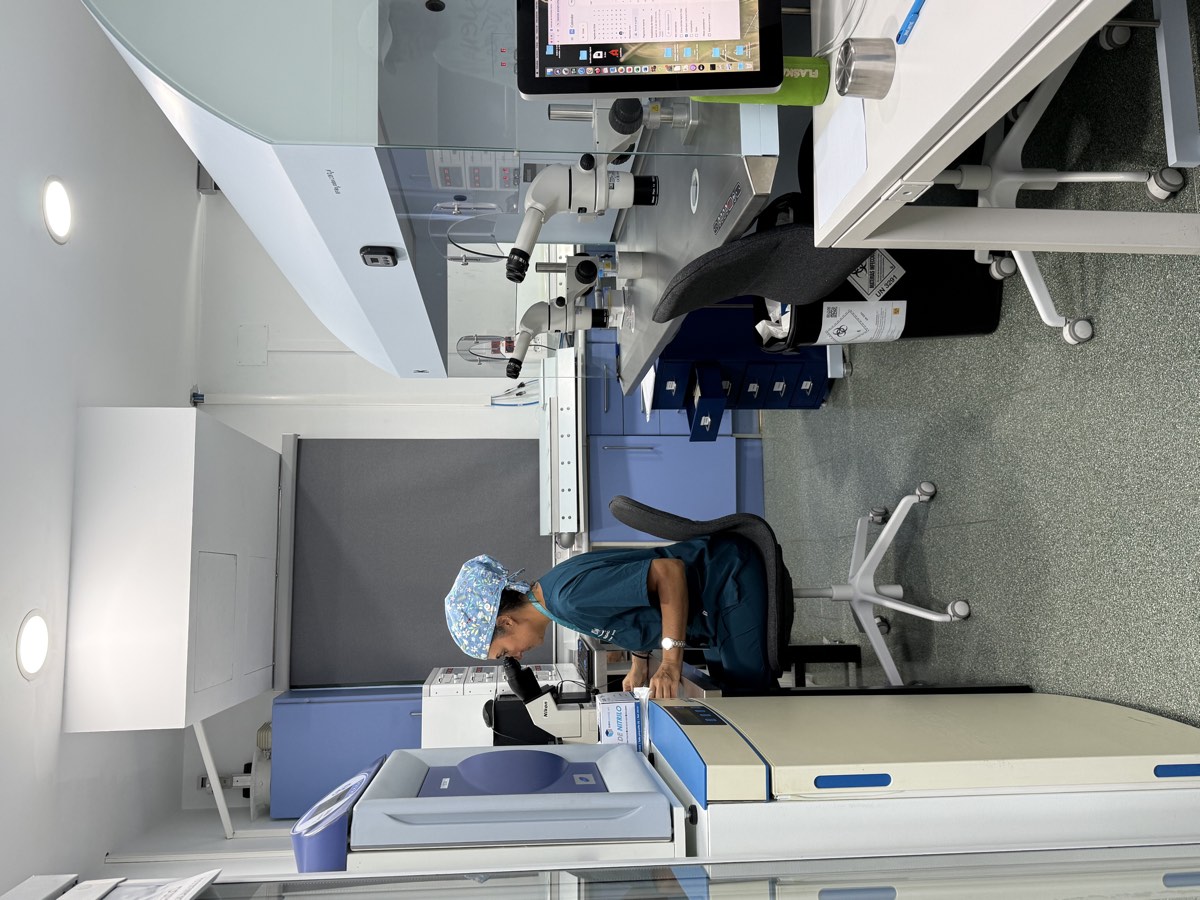
Artificial insemination (IUI) is indicated when there is ovulation, at least one working fallopian tube and semen with a mild abnormality, or donor sperm. IVF is indicated when the tubes are damaged, there is endometriosis, the semen has a moderate abnormality or insemination has not worked. ICSI (a single sperm is injected into each egg) is mainly used when the semen has a significant abnormality. Donation is used when your own eggs or sperm are not an option.
The treatments, as a staircase
You do not have to climb step by step as a rule: you start on the step that matches your cause.
Artificial insemination (IUI)
The ovaries are gently stimulated and the growth of the follicle (the small sac in the ovary where the egg matures) is monitored. At the time of ovulation, semen already prepared in the laboratory is placed in the womb. It is a simple treatment, with no operating theatre, and it can be done with your partner’s sperm or donor sperm.
Requirements: the woman must ovulate (on her own or with medication), at least one tube must work and the semen must have enough motile sperm after preparation. The number of attempts is decided according to age, the cause, the response and what has been tried before [33].
Insemination with your partner’s sperm
This is the option when the partner’s semen has a mild abnormality, when there are difficulties with intercourse or when testing does not find a clear cause. The semen is collected that same day and prepared in the laboratory to select the sperm with the best motility.
Insemination with donor sperm
It is indicated for women without a male partner and for couples in which the man has no sperm or there is a genetic risk they do not want to pass on. The donor is anonymous and is assigned by the medical team, looking for the closest possible physical and immunological match [13]. The samples come from a sperm bank and go through a quarantine of at least six months, with the infection checks required by the regulations, before they are used [21].
In vitro fertilisation (IVF)
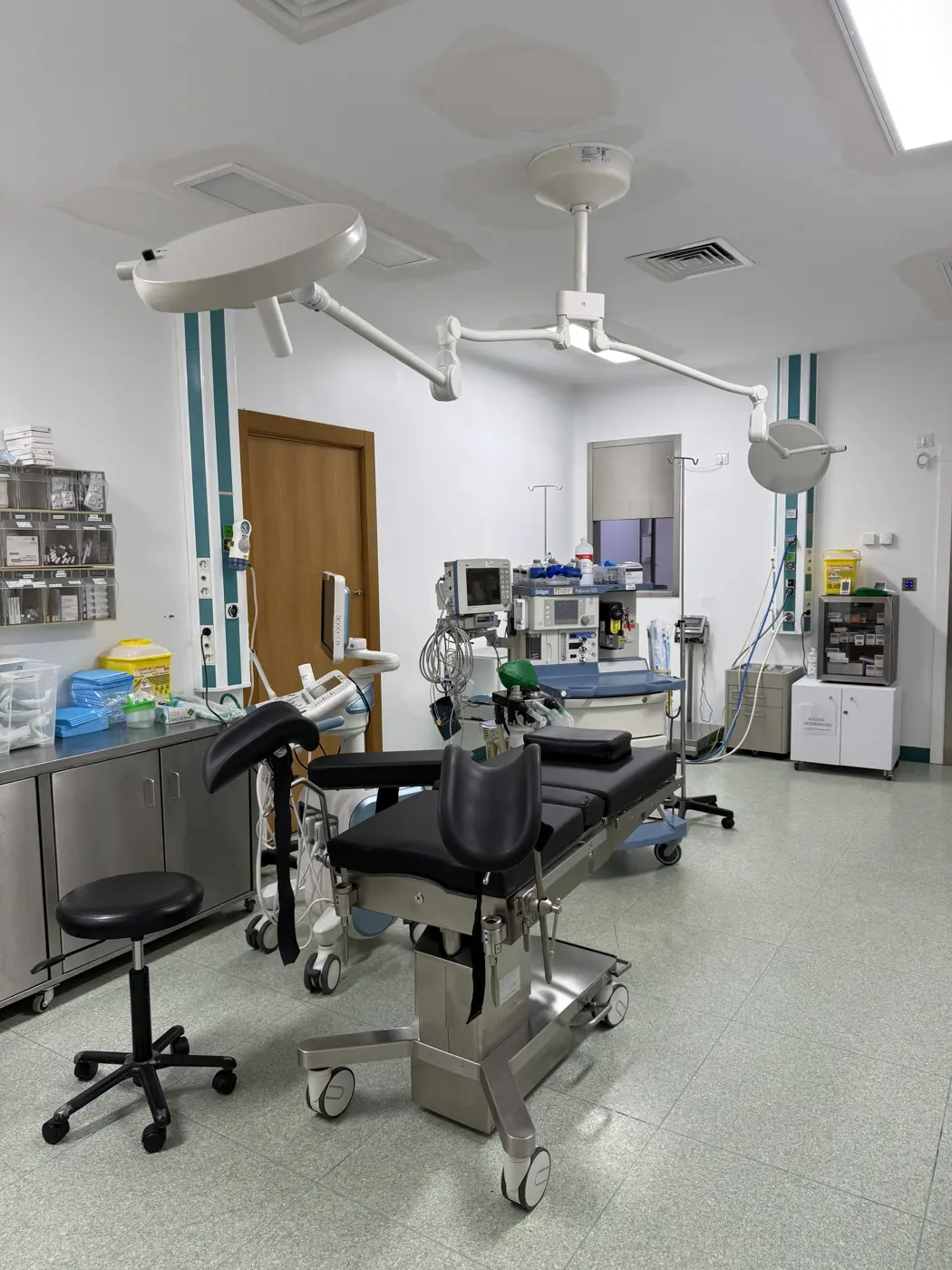
The ovaries are stimulated to produce several eggs, which are collected in a short procedure under sedation (egg retrieval). They are fertilised in the laboratory and the embryos are cultured for a few days. One is then transferred to the womb. The rest, if they are good quality, are vitrified, that is, frozen.
ICSI: when the problem is the sperm
This is a form of IVF in which the embryologist injects a single sperm into each egg. It is mainly indicated when the semen has a significant abnormality. When there is no such problem, it does not improve results, according to the European ESHRE guideline.
Treatments with a donor
With donor eggs (IVF with donor eggs), when the ovarian reserve is depleted, there is ovarian failure or a genetic risk. With donor sperm, for women without a male partner or when there are no sperm. In Spain, donation is anonymous and non-profit: only compensation for inconvenience and expenses, set by law, is allowed. Donors must be adults and healthy. The law limits to six the number of children born in Spain from the same donor.
How many embryos are transferred?
Spanish law allows a maximum of three to be transferred. Good practice is to transfer one: the European ESHRE guideline recommends this because it greatly reduces the risk of a multiple pregnancy, which carries more risks for the mother and the babies. In Spain, 90% of transfers with vitrified embryos and with donor eggs are already single-embryo transfers [9].
How to read a success rate
Before comparing rates, check what they count
A “success” figure only makes sense if it states four things: the technique, the age, what is measured and in which years.
A rate only makes sense if it states which technique, which age, what is counted (pregnancy or baby born) and which years. If a website gives you a percentage without that, do not use it to compare. The figures for all Spanish centres are published in the national activity register [9].
Frequently asked questions
What is the difference between artificial insemination and IVF?
With insemination, fertilisation happens inside the body: the semen is simply placed in the womb. With IVF, eggs and sperm are brought together in the laboratory and an embryo is transferred.
How many inseminations are done before moving on to IVF?
There is no fixed number. It is decided according to age, the cause, the response and what has been tried before, and it is reviewed with the doctor after each attempt.
Does IVF hurt?
It does not usually hurt. Stimulation means injections under the skin that you give yourself at home, and the egg retrieval is done under sedation; afterwards there may be mild discomfort for a day or two. Uncommonly, stimulation can cause ovarian hyperstimulation syndrome, and the egg retrieval can cause bleeding or infection: these risks are monitored and explained beforehand.
How long does an IVF treatment take?
From the start of stimulation to the transfer, about two or three weeks. The pregnancy test is done about ten days later.
Is egg donation anonymous in Spain?
Yes. Law 14/2006 states that it is anonymous and that the donor’s identity can only be revealed in exceptional cases provided for by law.
What is the ROPA method?
It is IVF for couples of two women in which one provides the eggs and the other carries the pregnancy.
So, what is your next step?
Answer a few questions and the pre-assessment will tell you which stage you are at and what is worth discussing at a consultation. It is free and you see the result straight away, without leaving your details.
Sources
- Saber más sobre fertilidad y reproducción asistida (guía para pacientes). Spanish Fertility Society (SEF), 2011 (legal deposit).
- Infertilidad inexplicada: guía para pacientes. ESHRE, 2023.
- The International Glossary on Infertility and Fertility Care. ICMART / WHO, 2017.
- Registro Nacional de Actividad 2023 – Registro SEF (nota de presentación). SEF and Spanish Ministry of Health, 2025.
- Ley 14/2006, sobre técnicas de reproducción humana asistida. BOE (Spanish Official State Gazette), 2006.
- Número de embriones a transferir (guía). ESHRE, 2023.
- Real Decreto-ley 9/2014, normas de calidad y seguridad para la donación de células y tejidos humanos (texto consolidado). BOE, 2014, updated.
- Unexplained infertility (guideline). ESHRE, 2023.
The numbers in square brackets in the text refer to this list.