
Fertility tests: what is done, when and why
Basic fertility tests answer three simple questions: is there an egg? Are there capable sperm? Can they meet? Both partners are tested at the same time, and the tests are usually completed within one or two cycles.
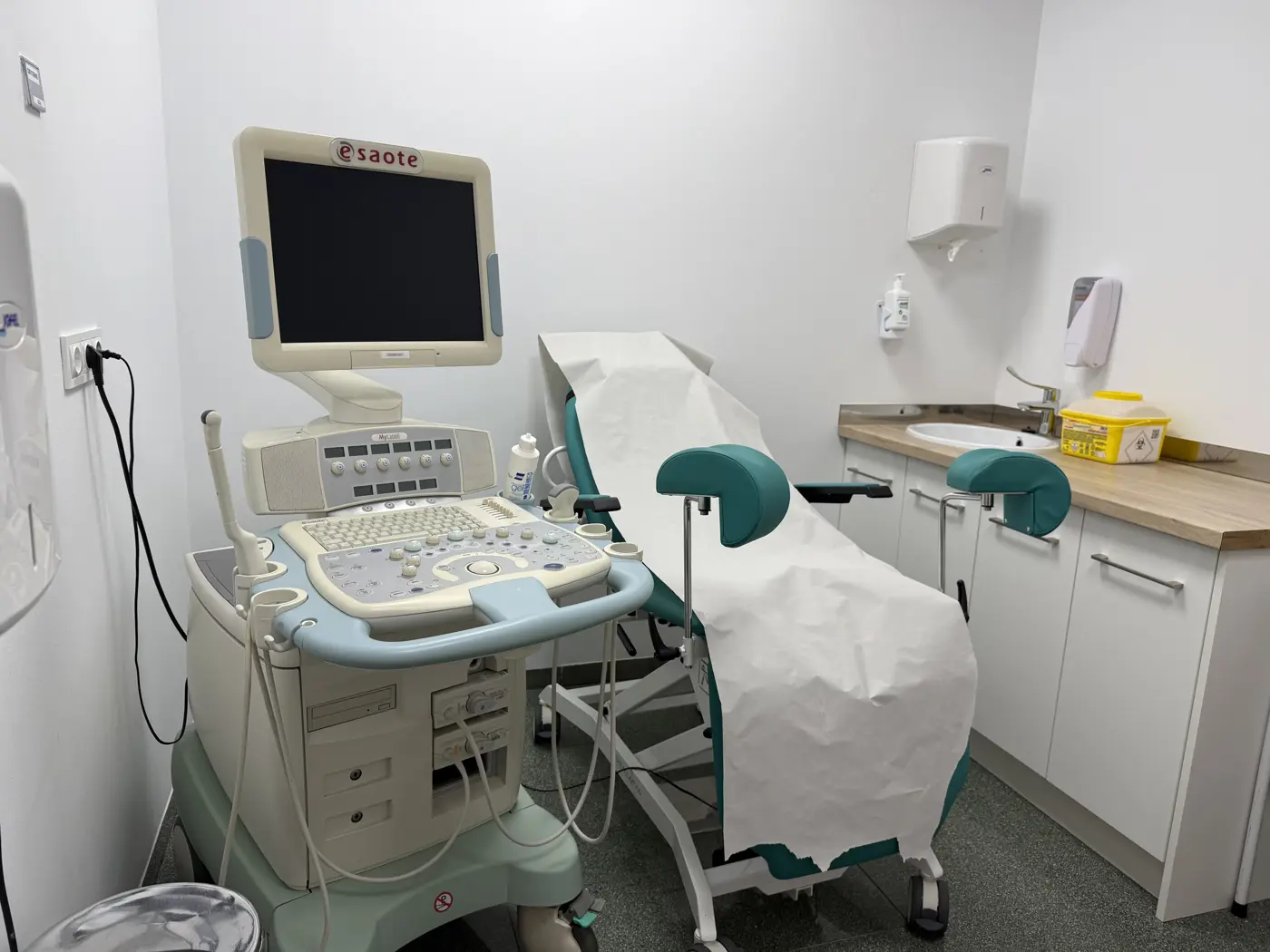
Basic fertility testing includes: for women, hormone blood tests, a transvaginal ultrasound scan and a tubal patency test; for men, a semen analysis (ideally two). AMH is only added when the doctor considers it appropriate.
Basic fertility tests at a glance
They answer three questions: are there viable sperm? Is there an egg? Can they meet?
Fertility tests for women
| Test | What it looks at | When |
|---|---|---|
| Hormone blood tests | How the ovaries are working and other hormones that play a part (thyroid, prolactin). | Days 2-5 of the cycle |
| Transvaginal ultrasound | Womb, ovaries and antral follicle count. | First half of the cycle |
| Tubal test | Whether the tubes are open (hysterosalpingography, an X-ray with contrast dye, or another equivalent technique). | After your period and before ovulation |
| AMH | An estimate of ovarian reserve. | Any day; only if appropriate |
For men: the semen analysis
This is an analysis of semen obtained by masturbation, after 2 to 7 days without ejaculating. Semen quality varies a lot from one sample to the next. That is why, if the result is abnormal, it is recommended to repeat it.
How to read a semen analysis
WHO lower reference limits (6th edition, 2021).
These values are not a pass or fail mark. They show the lower limit the WHO observed in men whose partners became pregnant within 12 months or less. A result below them helps guide treatment, but does not decide it on its own.
And then what?
With both partners’ results, the specialist explains what they have found and what options you have. Sometimes the conclusion is “everything is fine, keep trying for a while”; other times, a specific treatment. How the treatment is chosen.
Tests that are not routine
Some tests are only requested when there is a reason, such as repeated pregnancy losses, failed treatments or abnormal basic test results. Examples include chromosome analysis (karyotype), sperm DNA fragmentation, hysteroscopy or immunological tests. Doing them “just in case” does not improve results.
Frequently asked questions
What tests are done to find out if I am fertile?
Hormone blood tests, a transvaginal ultrasound with follicle count and, if you are trying to conceive, a tubal test. For the male partner, a semen analysis.
On which day of the cycle is the hormone test done?
The baseline hormone test is done between days 2 and 5 of the cycle. AMH can be tested on any day.
How many days of abstinence before a semen analysis?
Between 2 and 7 days without ejaculating, according to the WHO manual.
Does hysterosalpingography hurt?
It can cause discomfort similar to period pain for a few minutes. A painkiller beforehand is usually recommended.
Are pharmacy fertility tests any use?
Partly. Ovulation tests help pinpoint your fertile days. Home “ovarian reserve” or sperm tests give very limited information and do not replace proper testing.
So, what is your next step?
Answer a few questions and the pre-assessment will tell you which stage you are at and what is worth discussing at a consultation. It is free and you see the result straight away, without leaving your details.
Sources
- Saber más sobre fertilidad y reproducción asistida (guía para pacientes). Spanish Fertility Society (SEF), 2011 (legal deposit).
- Protocolo clínico: estudio básico de esterilidad. Hospital Universitario Virgen de las Nieves, 2025.
- WHO laboratory manual for the examination and processing of human semen, 6th ed.. World Health Organization (WHO), 2021.
- Estudio de reproducción (folleto para pacientes). Published on sefertilidad.net (Spanish Fertility Society, SEF), 2023.
The numbers in square brackets in the text refer to this list.