
Egg donation clinic in Malaga
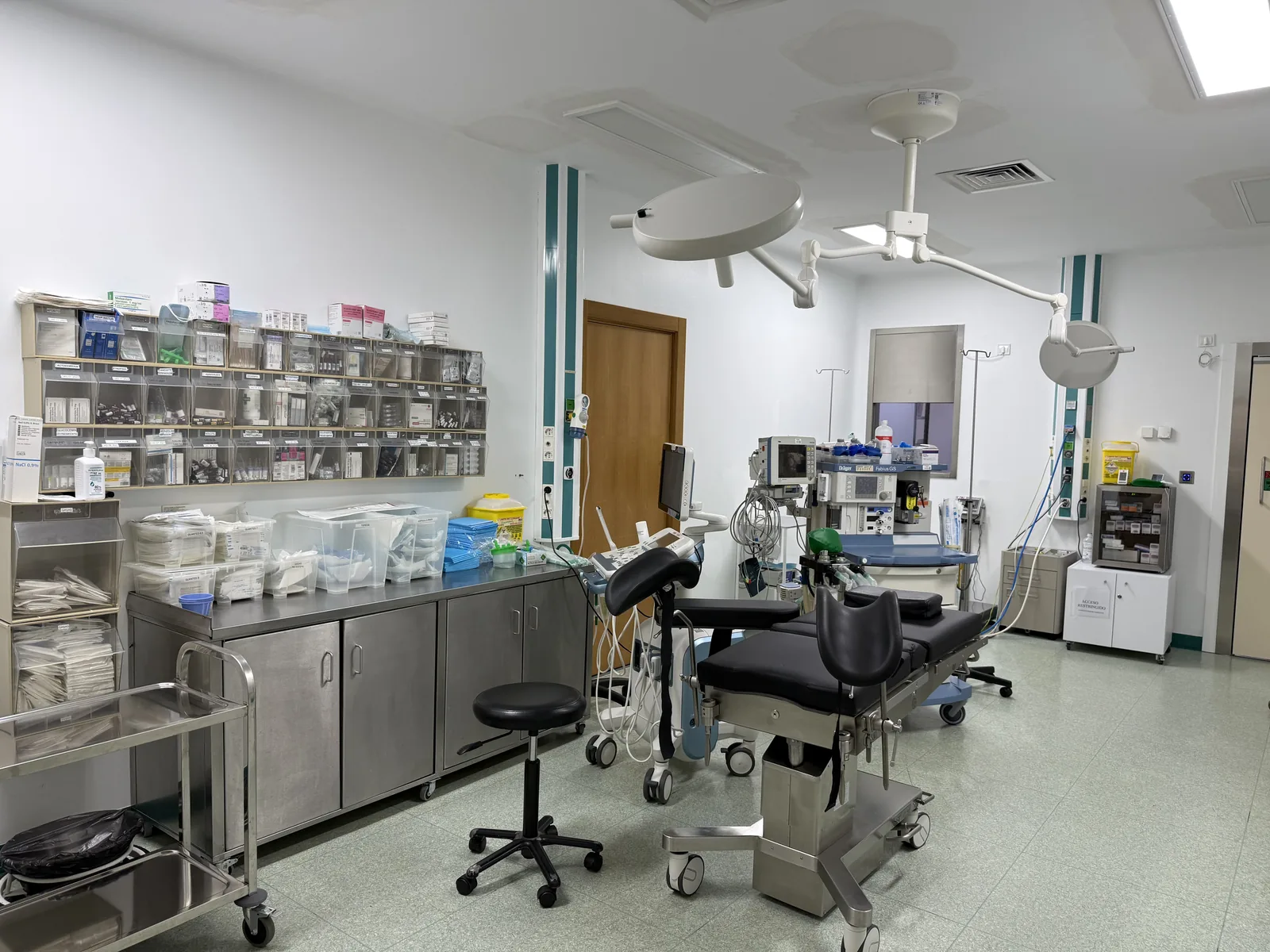
Egg donation is the technique with the highest guarantees of pregnancy, it is performed by In Vitro Fertilization
Discover everything about egg donation in Malaga: requirements, process, benefits and compensation. Help others fulfill their dream of becoming parents.
Women without ovarian function: identifies those women who lack menstruation:
- Premature ovarian failure:
These are considered to be situations in which menopause occurs at an age below 40 years.
The causes are very different, including genetic factors, surgical and oncological treatments (chemotherapy and radiotherapy).
- Primary ovarian failure:
This includes situations due to genetic and developmental defects that do not allow menstruation to occur from puberty (Pure gonadal dysgenesis: 46XX, Turner syndrome: 45XO, Swyer syndrome: 45XY, Savage syndrome).

Women who, despite having ovarian function, may experience greater risks or difficulties in achieving a healthy newborn when using their eggs:
- Women who are carriers of some type of hereditary disease that cannot be performed by Preimplantation Genetic Diagnosis.
- Women with ovaries that are inaccessible for the collection of oocytes.
- When repeated attempts at In Vitro Fertilization have not been previously successful (poor oocyte quality, low response and implantation failure).
- Women with a history of repeated miscarriages.
- Women over 40 years of age who, despite having ovarian function, are of an advanced age that does not allow them to obtain a good number of good quality oocytes or even an increased risk of Down Syndrome.
What are the steps of an egg donation treatment?
1. Complete evaluation
The couple will have to be examined in detail. The doctor will assess the set of tests necessary to carry out the treatment.
In the case of the man, a basic semen study will be necessary and when appropriate, a sperm sample will be cryopreserved.
If it is necessary to optimize the procedure or if any doubt arises, more tests may be requested.
2. Endometrial preparation
The recipient will undergo endometrial preparation treatment.
The endometrium is the tissue that will be in direct contact with the embryo at the time of implantation and its growth must be synchronized with embryonic development.
The treatment is very simple, it consists of imitating the hormonal changes that occur physiologically during a menstrual cycle.
3. Donor selection
The donor is selected based on the physical characteristics and blood type of the couple.
A clinical evaluation will have been previously carried out in accordance with the provisions of Law 14/2006 on Assisted Reproduction and the 1998 report of the National Commission on Assisted Human Reproduction.
4. Treatment of the donor
After this process, the donor will be treated to develop the necessary controlled ovarian hyperstimulation process and will subsequently undergo surgery in the operating room that will allow the oocytes to be obtained.
5. Oocyte insemination
The oocytes are prepared for insemination; this can be done through conventional in vitro fertilization (IVF) by incubating the eggs and sperm at a certain concentration or, more frequently, through the intracytoplasmic sperm injection (ICSI) technique, which consists of selecting a good quality sperm and microinjecting it into the egg to induce fertilization.
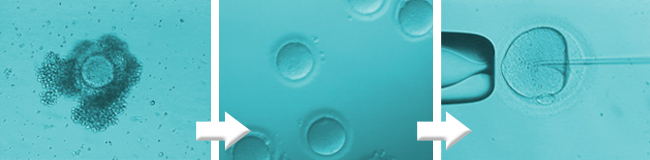
6. Embryonic incubation
Those eggs that have been properly fertilized will be kept in incubation, in a medium specially adapted to their metabolic and nutritional requirements.
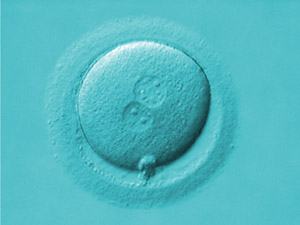
Each day, embryologists evaluate embryonic development, taking into account characteristics such as the rate of division, the symmetry between cells, and fragmentation. The embryos can be transferred on the 3rd or 5th day of development depending on each case.
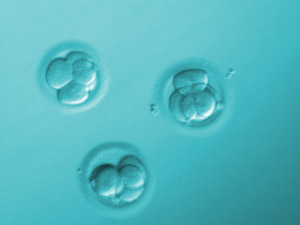
Embryos D+2
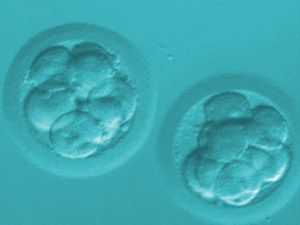
Embryos D+3
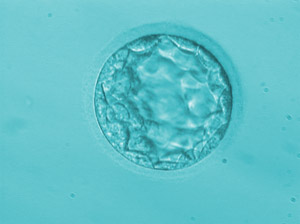
Blastocyst D+3
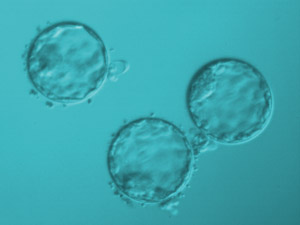
Blastocysts D+5
All remaining viable and high-quality embryos will be cryopreserved if not transferred to the uterus.
7. Embryo transfer
This is the procedure in which the selected embryos are placed in the mother's uterus. It is carried out through a cannula that is carefully introduced through the woman's cervical canal. The transfer is carried out in the operating room with the aim of maintaining adequate conditions in the IVF laboratory room. The number of embryos to be transferred will never be greater than 3 and will have to be decided in each case on an individual basis depending on the reproductive history of each couple and avoiding as far as possible increasing the chances of multiple gestation.
8. Vitrification of embryos
The remaining good quality embryos will be vitrified, which will allow the couple to have access to them whenever they wish for a new embryo transfer.
Preguntas frecuentes sobre la donación de óvulos en Málaga
What is egg donation in Malaga?
Egg donation in Malaga is a process in which a woman donates her eggs to help other couples or women fulfill their dream of becoming mothers, especially in cases of female infertility.
How is the egg donation process carried out in Malaga?
The process includes a series of medical tests, ovarian stimulation for the maturation of the eggs, the extraction of eggs through a small intervention and their subsequent use for in vitro fertilization.
What are the requirements to be an egg donor in Malaga?
Egg donors in Malaga must be healthy women, generally between 18 and 35 years old, with a good medical history and without genetic diseases that can be transmitted to their offspring.
Is egg donation anonymous in Malaga?
Yes, egg donation in Malaga is completely anonymous, both for the donor and the recipient, always respecting the confidentiality of both sides.
What are the benefits of donating eggs in Malaga?
In addition to helping a person or couple fulfill their dream of becoming parents, donors receive financial compensation for the time and effort involved in the donation process.
What happens after egg donation in Malaga?
After donation, egg donors in Malaga can return to their normal life after a short recovery period, with no long-term side effects on their fertility.
What are the risks of egg donation in Malaga?
As with any medical procedure, there may be risks associated with hormonal stimulation and egg retrieval, although these are minimized with thorough medical monitoring.
Can I donate eggs in Malaga if I have children?
Yes, women who already have children can be egg donors, as long as they meet the medical and psychological requirements established by the clinic.
How many eggs are usually donated in Malaga?
Depending on the ovarian response of each woman, between 8 and 15 eggs can be obtained per donation cycle in Malaga.
How are egg donors chosen in Malaga?
Clinics in Malaga carry out a rigorous selection process that includes medical, psychological and genetic tests to ensure the health and well-being of both the donor and the recipient.
Can I become a mother after donating eggs in Malaga?
Yes, women can have biological children after donating eggs, as the donation does not affect their long-term reproductive capacity.
How long does the egg donation process take in Malaga?
The entire egg donation process in Malaga, from initial testing to retrieval, usually takes between 4 and 6 weeks.
What is the financial compensation for donating eggs in Malaga?
Compensation varies depending on the clinic, but in general egg donors receive compensation for their time and effort, which can range from 800 to 1,500 euros.
Can I donate eggs more than once in Malaga?
Yes, in Malaga it is possible to donate eggs more than once, but it is regulated by Spanish legislation, which establishes a limit of donations per person.
What should I do to be an egg donor in Malaga?
First, you must contact a specialized clinic in Malaga, where you will undergo a series of medical and psychological tests to ensure that you are suitable for donation.
What are the requirements for receiving donated eggs in Malaga?
To receive donated eggs in Malaga, women must have an infertility condition that prevents gestation with their own eggs, or be carriers of serious genetic disorders.
Which clinics offer egg donation in Malaga?
There are several fertility clinics in Malaga that offer egg donation services, such as Rincón de la Fertilidad and other clinics specializing in fertility treatments.
How much does a fertilization treatment with donated eggs cost in Malaga?
The cost of a fertilization treatment with donor eggs in Malaga varies, but generally ranges between 5,000 and 8,000 euros, depending on the additional services included.
How long does it take to get donated eggs in Malaga?
The time needed to obtain donor eggs can vary, but in general, clinics in Malaga can offer available donor eggs within a month or two.
What happens to the donor's health after egg donation in Malaga?
Egg donors in Malaga are subject to exhaustive medical monitoring throughout the process to ensure that they do not suffer complications, and no long-term negative effects on their reproductive health have been reported.